



















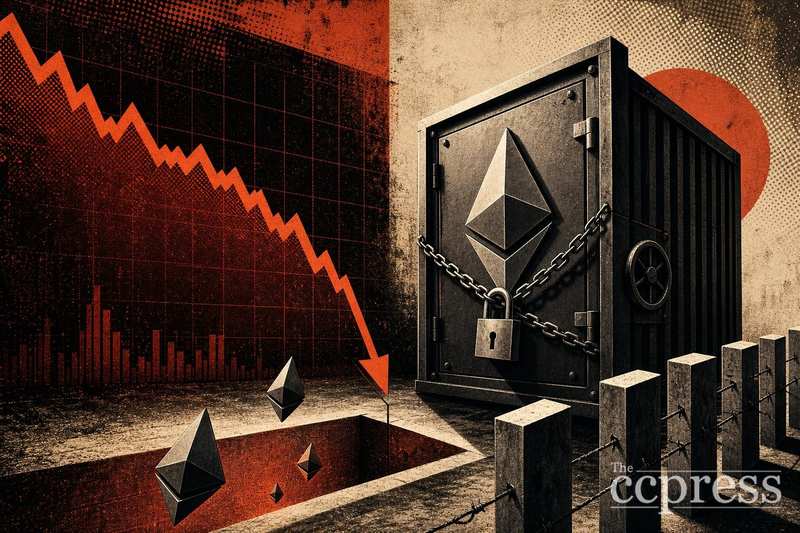
Ethereum exchange supply has reportedly dropped to a record low of $14.5 million, signaling a significant reduction in the amount of ETH readily available for trading on centralized platforms.
What the report says about Ethereum exchange supply
The reported figure points to a sharp drawdown in Ethereum held on exchange wallets. Exchange supply, sometimes called exchange reserve, measures the total value of a cryptocurrency sitting in wallets controlled by centralized exchanges. When that number falls, it typically means holders are moving tokens into self-custody, staking contracts, or decentralized finance protocols.
The claim aligns directionally with broader on-chain trends flagged by analytics providers. A CryptoQuant analysis recently noted that total crypto exchange reserves in USD terms dropped to $31.8 billion, described as the lowest level on record.
A separate CryptoQuant post highlighted that Ethereum liquidity on Binance fell to its lowest level since early 2026. Meanwhile, BeInCrypto reported that Galaxy Digital made a large ETH deposit, a move some analysts interpreted as a bullish signal for Ethereum’s near-term outlook.
Large institutional movements like these can accelerate reserve drawdowns when tokens shift from exchange wallets to custody or staking infrastructure, similar to institutional crypto allocation trends seen in recent ETF filings.
Why lower exchange balances matter for ETH liquidity
When exchange reserves decline, the pool of ETH available for immediate sale shrinks. A given buy order can move the price further than it would when reserves are deep, a condition traders refer to as thinner order-book liquidity.
A supply squeeze on exchanges does not guarantee upward price movement. Sellers can redeposit tokens at any time, and new supply enters circulation through staking reward unlocks and layer-2 bridge activity. The expanding crypto derivatives landscape also means that price discovery increasingly happens on futures venues rather than spot order books alone.
Still, historically low exchange balances have coincided with periods of reduced sell pressure. If demand remains steady while available supply contracts, the resulting imbalance tends to favor buyers, though the metric is one input among many rather than a standalone forecast.
What context is still missing around the reported low
Several pieces of context that would normally anchor this story remain unconfirmed. Current Ethereum price, 24-hour trading volume, and market capitalization data were not verified during the research process for this report. Without those figures, it is difficult to assess whether the reported reserve low is already reflected in market pricing.
The specific $14.5 million figure also warrants scrutiny. Ethereum’s total market capitalization is measured in the hundreds of billions of dollars, making a $14.5 million exchange supply figure unusually small. The number may refer to a net flow metric, a single exchange’s balance change, or a specific timeframe snapshot rather than total global exchange holdings.
Developments across the broader blockchain ecosystem, including recent protocol acquisitions focused on on-chain privacy, suggest that the trend toward self-custody and off-exchange activity extends beyond Ethereum alone.
Direct confirmation from a block explorer or a publicly accessible reserve dashboard with clear timestamps would strengthen the claim considerably. Until that level of verification is available, the reported record low remains an attributed data point rather than an independently confirmed fact.
Disclaimer: This article is for informational purposes only and does not constitute financial or investment advice. Cryptocurrency and digital asset markets carry significant risk. Always do your own research before making decisions.