



















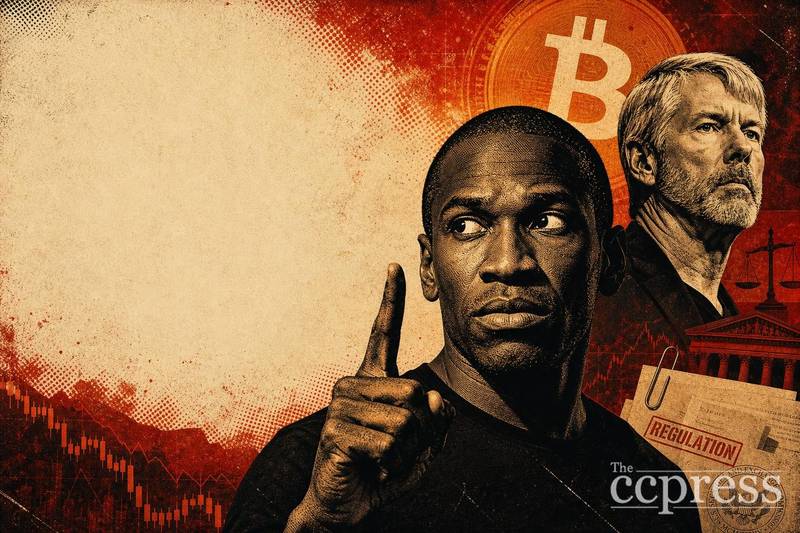
Arthur Hayes has cautioned Bitcoin holders against placing too much faith in Michael Saylor, warning that relying on a single influential figure to validate investment conviction is a risky approach to managing exposure in the cryptocurrency market.
Hayes, the co-founder of BitMEX, made the remarks during an appearance on The Wolf of All Streets podcast, where he discussed Bitcoin’s trajectory and the dangers of personality-driven investment strategies.
Why Hayes singled out Saylor as a risk for Bitcoin holders
Michael Saylor has become one of Bitcoin’s most visible corporate advocates. His company, Strategy (formerly MicroStrategy), now holds 843,738 BTC after acquiring an additional 24,869 coins, achieving a BTC yield of 12.6% year-to-date.
That level of accumulation has made Saylor a reference point for market sentiment. When he buys, retail and institutional participants often interpret it as a bullish signal, effectively outsourcing their own risk assessment to one company’s treasury strategy.
Hayes’s warning targets exactly this dynamic. Investors who anchor their conviction to Saylor’s purchases rather than conducting independent analysis expose themselves to risks they may not fully understand, including the financial structure behind Strategy’s acquisitions.
Strategy has funded its Bitcoin buying spree through a mix of equity and debt instruments, including a perpetual preferred stock offering (STRC). The company also reported a $12.5 billion net loss in Q1 as Bitcoin’s price declined during that period. These financial realities are often absent from the simplified narrative that “Saylor is buying, so Bitcoin must go up.”
What Bitcoin holders should take from Hayes’s warning
Hayes’s message boils down to a straightforward principle: no single market participant, regardless of how much they buy or how loudly they advocate, should serve as a substitute for personal due diligence.
Bitcoin market narratives can shift quickly when they depend on prominent individuals. If Strategy were ever forced to sell holdings due to debt obligations or adverse market conditions, investors who relied solely on Saylor’s conviction would find themselves without an independent framework for decision-making.
The practical takeaway is that holders should evaluate their own exposure, custody arrangements, and risk tolerance rather than following any single voice. This applies whether the voice belongs to Saylor, Hayes himself, or any other market figure.
As debates continue around topics like a potential Strategic Bitcoin Reserve bill and shifting institutional flows, including recent Bitcoin ETF outflow streaks, independent analysis matters more than personality-driven confidence. Even regulatory developments such as the SEC’s delayed framework for tokenized equities underscore how fast the landscape can shift beneath any single thesis.
Hayes’s caution is not an argument against Bitcoin or against Saylor’s strategy specifically. It is a reminder that conviction borrowed from someone else is not conviction at all.
Disclaimer: This article is for informational purposes only and does not constitute financial or investment advice. Cryptocurrency and digital asset markets carry significant risk. Always do your own research before making decisions.