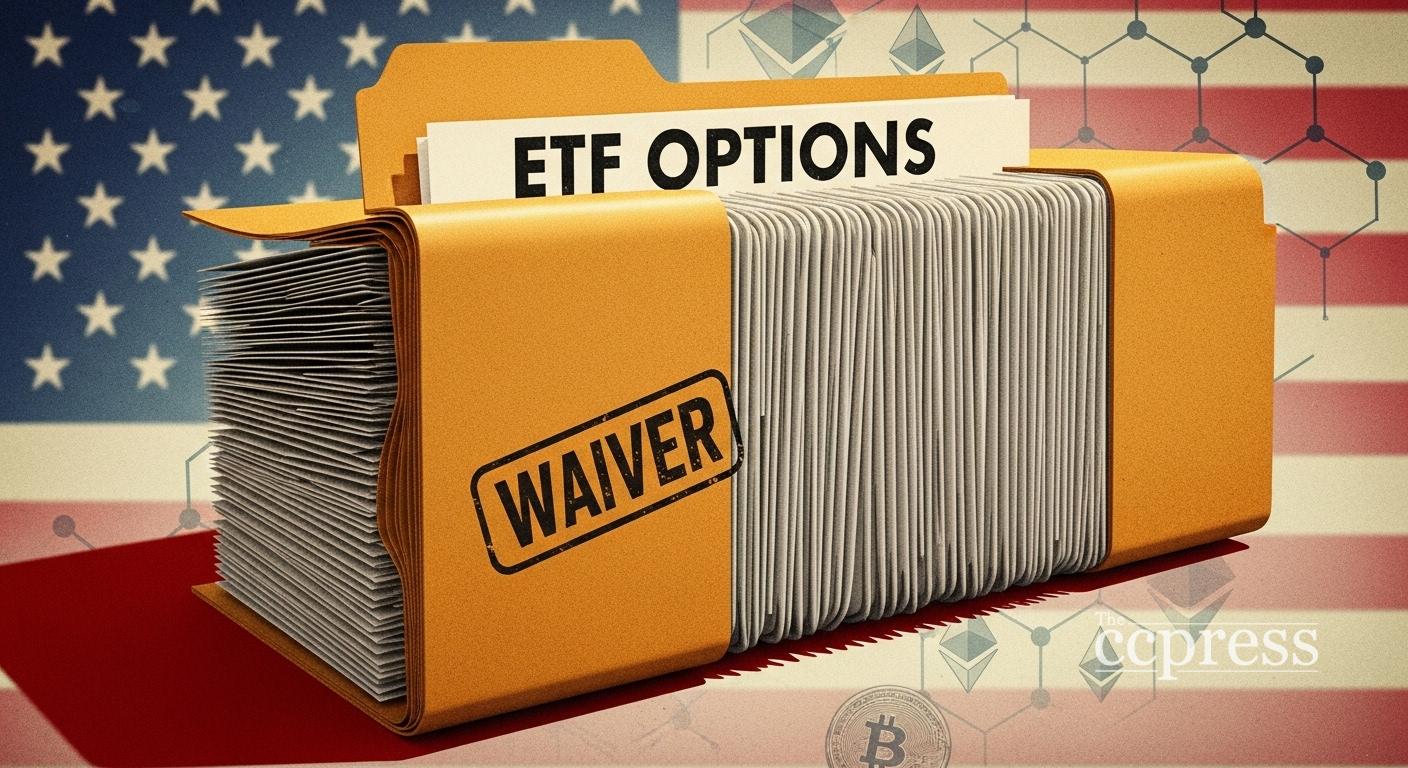
Nasdaq removes limits on Bitcoin and Ethereum ETF options, effective immediately
Nasdaq has removed position limits on options tied to spot Bitcoin and Ethereum exchange-traded funds, a change that is effective immediately after the U.S. Securities and Exchange Commission waived its standard 30‑day waiting period, as reported by CoinMarketCap. The prior cap of 25,000 contracts per options class is no longer in force, and the regulator retains authority to suspend the rule within 60 days under its oversight process, according to the same report.
Position limits restrict the number of options contracts a market participant can control across expiries, which exchanges and regulators use to mitigate concentration and manipulation risks. Aligning crypto ETF options with the treatment of commodity-based ETF options was cited as a rationale for the change, as reported by BanklessTimes.
What this means for liquidity, institutional access, and hedging
With position caps removed, market makers can warehouse larger inventories and quote tighter spreads, which may support deeper order books and the execution of block trades. ETFs such as BlackRock’s iShares Bitcoin Trust (IBIT) are among the products most directly affected, allowing larger institutions to construct delta-hedged exposures and manage creation/redemption risk more efficiently, as noted by Bitget.
Analysts have argued the previous thresholds constrained larger participants, particularly during volatile periods or around expirations. “The old limits were restrictive,” said Eric Balchunas, senior ETF analyst at Bloomberg.
Expanded capacity could also enable more sophisticated overlays, such as collars, cash-secured puts, or covered calls, implemented on ETF shares rather than on underlying spot markets. In practice, this may facilitate broader dealer participation and more efficient inventory management, though actual liquidity outcomes will depend on market-maker engagement and end‑investor demand.
SEC oversight and risks: concentration, surveillance, and margin controls
Removing caps can raise concentration concerns if a small number of firms accumulate outsized exposures, potentially amplifying stress during sharp price moves. Strong venue-level surveillance, risk monitoring, and margin controls are key mitigants, as reported by CoinTelegraph.
From a regulatory perspective, the change operates within existing federal oversight of exchange rules, and surveillance-sharing agreements and capital requirements remain central to protecting market integrity. Market outcomes will hinge on how dealers size inventories under house and clearing margins, and whether programmatic hedging smooths or amplifies volatility in the ETF ecosystem.
At the time of this writing, Coinbase Global (COIN) last traded at 166.00 in after-hours on February 13, up 1.02%, based on data from Yahoo. That context reflects broader equity-market sensitivity to evolving crypto market structure and regulatory clarity without implying any directional view.
| Disclaimer: The content on The CCPress is provided for informational purposes only and should not be considered financial or investment advice. Cryptocurrency investments carry inherent risks. Please consult a qualified financial advisor before making any investment decisions. |