
Australia's Federal Court has ordered Binance Australia Derivatives to pay a A$10 million penalty after the exchange misclassified 524 retail investors as wholesale clients, stripping them of key consumer protections and exposing them to high-risk crypto derivatives they were never meant to access.
A$10 Million Penalty for Onboarding Failures
The Australian Securities and Investments Commission (ASIC) secured the penalty against Oztures Trading Pty Ltd, the entity operating as Binance Australia Derivatives, in a Federal Court ruling handed down on March 27, 2026. The fine, equivalent to roughly USD $6.9 million, follows civil proceedings ASIC initiated in December 2024.
Between July 2022 and April 2023, Binance's onboarding system misclassified 524 retail investors as wholesale clients. That figure represented over 85% of Binance Australia's entire client base at the time.
The affected clients incurred A$8.66 million in trading losses and paid A$3.89 million in fees, totalling more than A$12 million in financial harm. The regulator's case centered on a specific flaw: Binance's platform allowed users unlimited attempts to pass a multiple-choice "sophisticated investor" qualification quiz until they achieved a passing score.
ASIC Chair Joe Longo did not mince words about the severity of the breach:
"Binance's shortcomings left more than 85% of their Australian customer base exposed to high-risk products they should have never been able to access, and without important consumer protections or rights, costing retail investors millions. This wasn't just a technical breach; it directly resulted in over $12 million in client losses."
Joe Longo, ASIC Chair
Binance responded by framing the issue as self-reported and already resolved. A Binance spokesperson stated: "The issue was self-identified, reported to ASIC, and fully remediated in 2023, with approximately A$13 million compensated to affected users. Oztures ceased its derivatives business and voluntarily gave back its AFSL in 2023."
Why Retail vs. Wholesale Classification Matters
Under Australia's Corporations Act 2001, financial services providers must correctly classify clients as either retail or wholesale. Retail clients receive mandatory protections including Product Disclosure Statements, target market determinations, and access to external dispute resolution schemes.
Wholesale clients waive these protections. For exchanges, classifying users as wholesale reduces compliance obligations significantly, removing the requirement to provide detailed risk disclosures or assess product suitability for individual clients.
The unlimited quiz retake mechanism was the operational loophole that made the misclassification possible at scale. Rather than genuinely screening for financial sophistication, the system effectively let any user brute-force their way to a "wholesale" designation by retaking the test until they passed. This gave retail users access to crypto derivatives products without any of the safeguards Australian law requires.
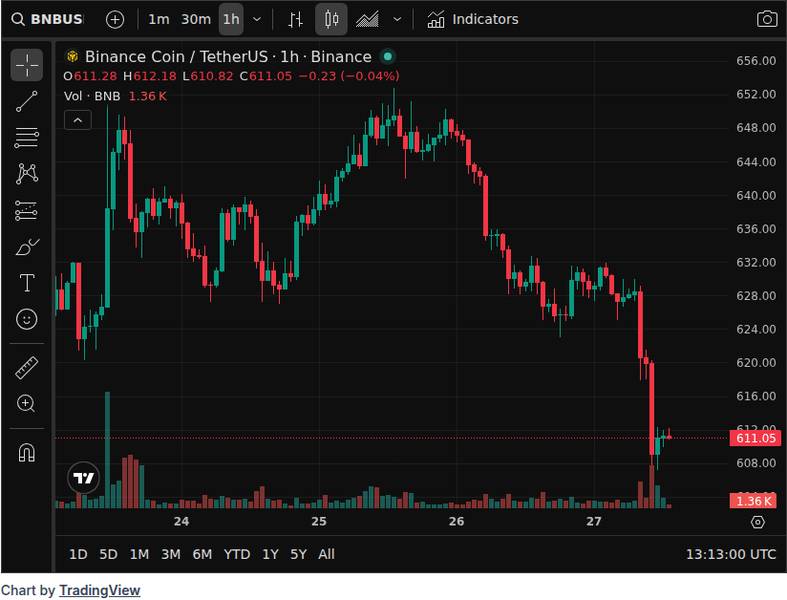
The scale of harm underscores why the distinction exists. The 524 misclassified users lost a combined A$12.55 million in trading losses and fees, losses that proper retail classification and accompanying disclosures may have helped prevent or mitigate. As crypto markets continue to see sharp intraday swings that can wipe billions in value within minutes, proper investor classification serves as a frontline consumer protection.
Total Cost Exceeds A$23 Million as Global Scrutiny Continues
The A$10 million court-ordered penalty is not the full financial picture. Binance Australia had already paid approximately A$13.1 million in compensation to affected clients in 2023, a remediation process overseen by ASIC. Combined, the total cost to Binance's Australian entity exceeds A$23 million.
ASIC cancelled Binance Australia's Australian Financial Services licence on April 6, 2023, effectively ending the entity's derivatives business in the country. The civil proceedings that produced this week's penalty followed more than a year later.
This action fits a pattern of global regulatory enforcement against Binance. In 2023, the exchange's parent entity reached a $4.3 billion settlement with the U.S. Department of Justice over anti-money laundering and sanctions violations. The exchange has faced restrictions or bans in multiple jurisdictions including Canada, the Netherlands, and Nigeria.
The Australian case signals that regulators are paying close attention to the mechanics of how crypto platforms onboard users, not just whether they hold the right licences. The unlimited quiz retake loophole is a concrete example of a compliance system that technically existed but failed in practice.
For other crypto derivatives providers operating in Australia, the message is direct: classification systems must function as genuine gatekeeping, not performative checkboxes. With billions in crypto options expiring regularly and retail interest in derivatives growing, regulators are watching how platforms determine who should access these products.
ASIC has not signaled whether further proceedings against other crypto platforms are imminent, but the Binance ruling establishes a clear precedent: onboarding failures that result in investor harm will carry material financial consequences, even when the offending entity has already compensated affected users and surrendered its licence.
Disclaimer: This article is for informational purposes only and does not constitute financial or investment advice. Cryptocurrency and digital asset markets carry significant risk. Always do your own research before making decisions.