
The best custodial and self-hosted crypto payment gateways are CoinGate, Triple-A, BitPay, NOWPayments, 0xProcessing, and PayRam. The category divides cleanly between businesses that want managed compliance and easy settlement, and businesses that want direct control over funds, infrastructure, and transaction logic.
They also introduce a new control question. If the processor manages custody, compliance, and fiat conversion, the merchant gains convenience but gives up some autonomy. If the merchant chooses a self-hosted or non-custodial route, control increases, but so does operating responsibility.

Which Crypto Payment Gateway Model Is Best?
For most ordinary businesses, a managed processor such as CoinGate is still the best balance of convenience and control. For businesses that prioritize sovereignty, direct wallet control, or self-hosted infrastructure, PayRam and NOWPayments are more compelling even though they demand more operational ownership.
Why This Distinction Matters More
The custody question matters more now because stablecoin settlement, API-driven payments, and machine-led transaction flows are pushing crypto payments deeper into business infrastructure. Once that happens, the gateway is no longer just a frontend tool. It becomes part of treasury, risk, and data visibility.
That is why the comparison below is not based on popularity. It is based on how each gateway handles control, compliance, and payout design.

Managed vs Self-Hosted Snapshot
| Gateway | Model | Main strength | Main tradeoff |
|---|---|---|---|
| CoinGate | managed | transparent pricing and flexible settlement | stronger compliance burden |
| Triple-A | managed | compliance-first processor logic | pricing not publicly simple |
| BitPay | managed | conservative fiat-ready settlement | higher fee range |
| NOWPayments | non-custodial | wallet control and broad asset support | less enterprise polish |
| 0xProcessing | crypto-native | wide chain support and flexible routing | lower public fee transparency |
| PayRam | self-hosted | strongest sovereignty and self-custody logic | highest operating responsibility |
1. CoinGate
Introduction
CoinGate is the cleanest managed-processor benchmark in this comparison because it keeps pricing public and gives the merchant multiple payout choices without pretending to be a self-custody tool.
Advantages
- 1% standard fee
- fiat, stablecoin, or crypto settlement
- practical integration options
- regulated, merchant-friendly posture
Disadvantages
- KYC and AML requirements are meaningful
- standard-plan settlement is slower than some merchants will want
- less direct control than self-hosted systems
Quick Specs
- Transaction fee: 1%
- Custody model: managed
- Payout: EUR, USD, stablecoins, crypto
- Integration: plugins, API, payment buttons, billing
2. Triple-A
Introduction
Triple-A sits high in the managed camp because it is explicitly structured around business verification, wallet support, and fiat or crypto settlement. For businesses that care more about regulated processor behavior than about radical self-sovereignty, that is a feature rather than a weakness.
Advantages
- strong compliance-first operating model
- fiat and crypto settlement
- broad support for stablecoins and Lightning
- useful for businesses that want a processor rather than a crypto toolkit
Disadvantages
- KYB is mandatory
- fee structure is not publicly simple
- less attractive for small self-serve merchants
Quick Specs
- Transaction fee: not publicly disclosed
- Custody model: managed
- Payout: fiat or crypto
- Integration: processor-led service with API support
3. BitPay
Introduction
BitPay remains relevant because some businesses want fewer philosophical decisions and more predictable processor behavior. That still gives it a place in a custody comparison.
Advantages
- known processor model
- daily settlements
- fiat or crypto payout paths
- good plugin and merchant operations support
Disadvantages
- higher fee range than lower-cost crypto-native rivals
- not a self-custody tool
- more conservative and less flexible than newer alternatives
Quick Specs
- Transaction fee: 1-2% + $0.25
- Custody model: managed
- Payout: fiat or crypto
- Integration: plugins, invoices, online and in-store
4. NOWPayments
Introduction
NOWPayments is one of the strongest non-custodial compromises in the category. It gives merchants direct wallet-level payout logic without forcing a fully self-hosted stack.
Advantages
- non-custodial payouts
- low headline fee
- broad token and chain support
- useful mix of invoicing, subscriptions, POS, and API tools
Disadvantages
- extra exchange fee applies when conversion is needed
- merchant UX is more utilitarian than enterprise processors
- less persuasive for compliance-heavy businesses
Quick Specs
- Transaction fee: 0.5%
- Additional exchange fee: 0.5% when needed
- Custody model: non-custodial
- Integration: API, invoices, subscriptions, plugins, POS
5. 0xProcessing
Introduction
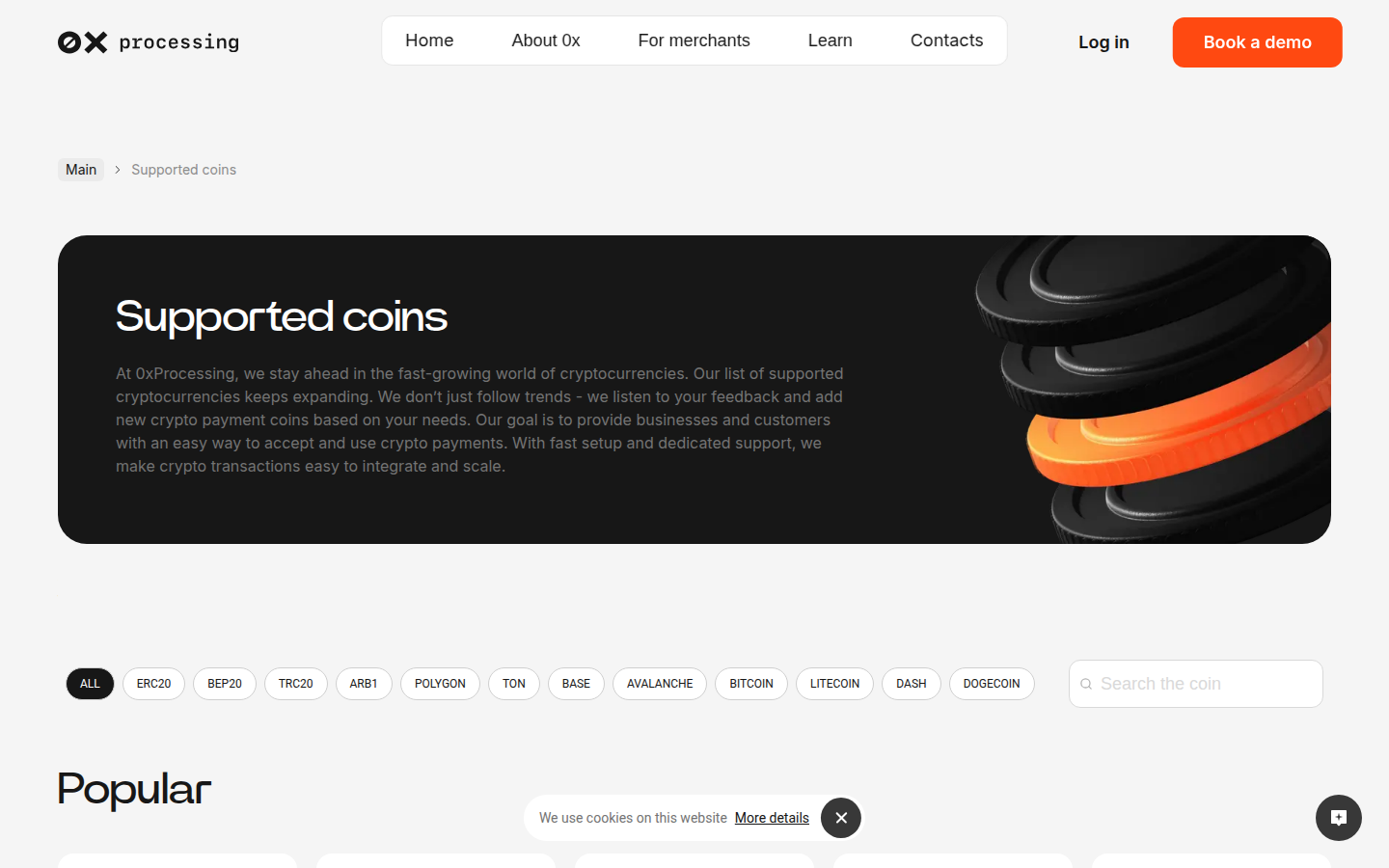
0xProcessing is a strong crypto-native alternative when merchants want broad chain support, faster onboarding, and more flexible routing than traditional processors usually allow.
Advantages
- 85+ coins across 18 blockchains in public product messaging
- KYC-less registration positioning
- supports volatility-control logic into stablecoins
- strong fit for crypto-heavy business flows
Disadvantages
- public fee transparency is weaker than CoinGate or NOWPayments
- less familiar to mainstream merchants
- not as conservative a compliance story as processor-first rivals
Quick Specs
- Transaction fee: not cleanly disclosed in simple public pricing form
- Custody model: crypto-native managed flow with direct flexibility
- Payout: wallet or bank-account withdrawal options according to product pages
- Integration: API and merchant dashboard
6. PayRam

Introduction
PayRam is the strongest sovereignty-first answer in the comparison. It is built for businesses that do not want the gateway itself to become the place where private keys, merchant data, and payout logic become someone else’s operational layer.
Advantages
- self-hosted and self-custody design
- no signup and no KYC for the gateway software in PayRam’s positioning
- multi-chain support
- clear fit for agentic, API-first, or privacy-sensitive commerce
Disadvantages
- no simple public processor-style merchant fee sheet
- merchant must carry more operational responsibility
- weak fit for companies that want turnkey managed compliance
Quick Specs
- Transaction fee: not simply disclosed
- Custody model: self-hosted, self-custody
- Payout: onchain-first
- Integration: APIs, payment links, payouts, MCP server
Final Take
Custodial versus self-hosted is not a cosmetic difference. It is the core strategic split inside crypto payments.
CoinGate, Triple-A, and BitPay make the most sense when the business wants convenience, clearer compliance handling, and easier fiat-ready operations. NOWPayments, 0xProcessing, and PayRam become more compelling as the merchant moves toward wallet control, crypto-native routing, and infrastructure sovereignty. The right answer depends on whether the business wants to outsource complexity or control it directly.
References
- CoinGate. Pricing
- Triple-A. What Services Does Triple-A Provide
- BitPay. Business Payments
- NOWPayments. Pricing
- 0xProcessing. Supported Coins
- PayRam. Introduction
Disclaimer: This article is for informational and editorial purposes only and does not constitute legal, compliance, tax, or financial advice. Businesses should verify onboarding rules, jurisdiction limits, and current operating terms with each provider before deployment.