
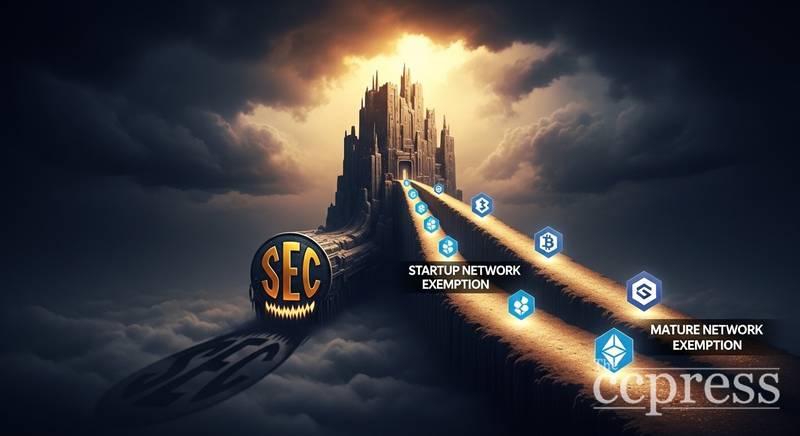
SEC Chair Paul Atkins has proposed a two-part “safe harbor” framework for crypto companies, combining a startup exemption for early-stage token projects with a mature network exemption for sufficiently decentralized protocols. The structure, introduced during remarks on March 17, 2026, represents the most concrete regulatory relief proposal the SEC has put forward since Atkins took the chair.
What Atkins’ Safe Harbor Framework Actually Proposes
The framework splits crypto projects into two categories based on their stage of development. The startup exemption targets early-stage projects that issue tokens while still building toward decentralization, giving them a defined window to operate without triggering securities registration requirements.
The mature network exemption addresses the other end of the spectrum. Protocols that have achieved sufficient decentralization could qualify for a determination that their tokens no longer function as securities, according to Atkins’ remarks published on the SEC website.
The startup path would apply to founding teams and early contributors who need time to distribute governance and build out network infrastructure. The mature network path would apply to projects like established layer-1 blockchains where no single entity controls the protocol’s operation.
Atkins introduced this in his capacity as SEC Chair, but the proposal is not a finalized rule. It represents a policy direction that would need to go through the SEC’s formal rulemaking process, including a public comment period, before taking effect.
A Deliberate Break From the Gensler-Era Enforcement Posture
The proposal marks a sharp contrast with the SEC’s approach under former Chair Gary Gensler. The Gensler-era SEC pursued aggressive enforcement actions against major crypto firms including Coinbase, Ripple, and Kraken, treating most token offerings as unregistered securities sales. The shift toward exemption-based frameworks signals a fundamentally different regulatory philosophy.
The safe harbor concept is not new. Former SEC Commissioner Hester Peirce first proposed a version in 2020, dubbed “Token Safe Harbor 1.0,” which would have given crypto projects a three-year grace period before securities laws applied. That proposal was never adopted under Gensler’s leadership.
Atkins, who was confirmed as SEC Chair in 2025, has consistently signaled a pro-innovation stance on digital assets. His confirmation followed the Trump administration’s crypto executive orders, which prioritized regulatory clarity over enforcement-first approaches. Projects previously navigating SEC scrutiny, including those involved in ongoing investigations, could see their regulatory outlook shift if a formal safe harbor advances. The SEC’s recent move to limit its OTC broker-dealer rule to equity securities further reflects this narrowing of the agency’s crypto enforcement scope.
Peirce’s original 2020 proposal drew significant industry support but stalled in an SEC that viewed most tokens through a securities lens. Atkins reviving and expanding the concept into a two-tier structure suggests the current commission is willing to act where its predecessor would not.
What This Means for Crypto Projects Seeking U.S. Regulatory Clarity
For startups, the practical benefit is straightforward: a defined compliance window to build, decentralize, and distribute tokens without the immediate threat of an SEC enforcement action. Under current rules, token-issuing projects face legal uncertainty from day one, often forcing them to incorporate offshore or avoid U.S. users entirely.
For mature protocols, the stakes are different. A formal mature network exemption could retroactively reduce legal risk for established blockchains whose tokens have been classified or threatened as securities. This could affect projects currently under SEC consent orders or active investigation, potentially opening a path to reclassification.
The broader implications extend to how the U.S. competes for crypto development talent and capital. Several layer-1 blockchain projects, including those building privacy-focused infrastructure, have launched outside U.S. jurisdiction partly because of regulatory uncertainty. A workable safe harbor could reverse that trend.
The framework also has implications for Ethereum and other networks navigating the securities question. As Ethereum’s leadership pushes a leaner protocol vision, the mature network exemption could provide formal regulatory footing for tokens on networks that meet decentralization thresholds.
Key uncertainties remain. The proposal must pass through the SEC’s rulemaking process, which includes drafting formal rule text, opening a public comment period, and securing a commission vote. No specific timeline for these steps has been disclosed. The definition of “sufficient decentralization,” the metric that would determine which projects qualify for the mature network exemption, has not been specified and will likely be the most contested element of any formal rule.
Founders, investors, and compliance teams should treat this as a strong directional signal, not an operative rule. Until the rulemaking process produces a final rule, existing securities regulations still apply to token issuances and crypto project operations in the United States.
Disclaimer: This article is for informational purposes only and does not constitute financial or investment advice. Cryptocurrency and digital asset markets carry significant risk. Always do your own research before making decisions.