



















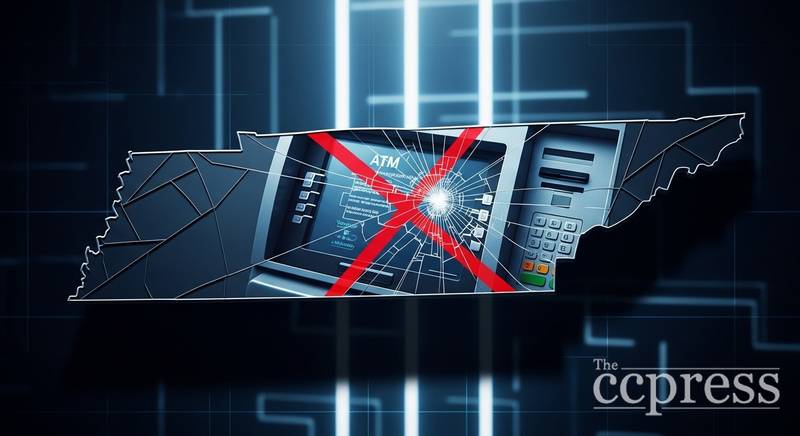
Tennessee has reportedly become the second U.S. state to outlaw Bitcoin and cryptocurrency ATMs, following Indiana’s lead in cracking down on crypto kiosks over fraud and consumer protection concerns.
The move stems from Tennessee House Bill 2505, a legislative measure that would ban the operation of crypto ATMs statewide. The bill targets kiosk machines that allow users to buy or sell Bitcoin and other digital assets using cash or debit cards.
According to a report from The Block, Tennessee joins Indiana as the second state to take this step, framing the prohibition as part of a broader fraud crackdown. Crypto ATMs, sometimes called Bitcoin kiosks, have been widely available across convenience stores and gas stations in the U.S.
Why State Regulators Are Targeting Crypto ATMs
Crypto ATMs have drawn attention from state regulators because they sit at the intersection of cash transactions and digital assets, creating conditions that fraud operators exploit. Scammers frequently direct victims to crypto kiosks to send irreversible payments, often impersonating government agencies or tech support representatives.
Unlike mainstream cryptocurrency exchanges that enforce identity verification and transaction monitoring under federal anti-money-laundering rules, many crypto ATM operators have historically operated with lighter compliance standards. This gap has made kiosks a preferred tool for romance scams, impersonation schemes, and money laundering.
Indiana became the first state to act on these concerns. The Indiana legislature passed a bill banning crypto ATMs and sent it to the governor, citing the machines’ role in facilitating fraud against vulnerable consumers.
What Tennessee Becoming the Second State Could Mean Next
If Tennessee’s ban takes full effect, crypto ATM operators would be forced to remove machines across the state. For users who relied on kiosks as their primary access point to Bitcoin, particularly those without bank accounts or exchange accounts, the ban eliminates a physical on-ramp to digital assets.
The “second state” designation is significant because it signals an emerging pattern rather than an isolated action. With two states now moving to outlaw crypto ATMs, operators in other states may face growing pressure from local lawmakers considering similar measures.
The bans also raise questions about how crypto access will evolve at the state level. Some jurisdictions are exploring alternative frameworks for digital asset payments through traditional financial rails, such as Mastercard-powered crypto payment integrations, which could offer compliant alternatives to physical kiosks.
Meanwhile, larger institutional players continue to interact with digital assets through different channels. Recent moves like BitMine’s proposed purchase of 10,000 ETH from the Ethereum Foundation and Mantle’s proposed ETH loan to Aave DAO illustrate that institutional crypto activity increasingly flows through structured deals rather than retail kiosks.
For the crypto ATM industry, these state-level prohibitions represent a direct challenge to business models built on physical kiosk networks. Whether additional states follow Tennessee and Indiana will depend on how consumer protection advocates weigh measurable fraud harm against the industry’s compliance improvements.
Disclaimer: This article is for informational purposes only and does not constitute financial or investment advice. Cryptocurrency and digital asset markets carry significant risk. Always do your own research before making decisions.