




















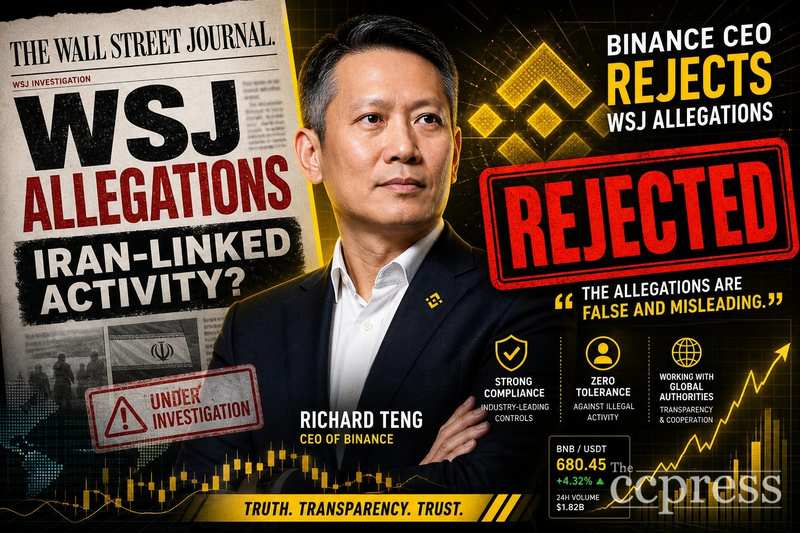
Binance CEO Richard Teng has rejected allegations published by The Wall Street Journal linking the cryptocurrency exchange to Iran-related activity, escalating a public dispute between the world’s largest crypto trading platform and one of the most prominent financial news outlets.
What the WSJ Report Alleged About Iran-Linked Activity on Binance
The Wall Street Journal published a report alleging that Binance had facilitated activity tied to Iranian entities on its platform. The claims drew on concerns about potential sanctions evasion, a particularly sensitive topic given Binance’s 2023 guilty plea to federal charges that resulted in a $4.3 billion resolution with U.S. authorities.
A U.S. Senate Homeland Security and Governmental Affairs Committee report on Binance and Iran sanctions evasion has added congressional scrutiny to the exchange’s compliance record. The committee’s findings provided additional context for the allegations that Teng moved to counter.
The allegations carry weight because Iran is subject to comprehensive U.S. sanctions. Any crypto platform found to have knowingly facilitated transactions involving Iranian users or entities could face severe legal consequences.
How Binance CEO Richard Teng Responded to the Report
Richard Teng, who became Binance CEO after founder Changpeng Zhao stepped down as part of the 2023 settlement, rejected the WSJ allegations. Binance has characterized the report as inaccurate and pursued legal action against the publication, as detailed in a complaint filed against the WSJ.
The exchange has also outlined its compliance position through an official blog post, pushing back on the characterization of its operations. Teng’s response represents a departure from earlier Binance leadership approaches, opting for direct legal confrontation rather than social media rebuttals.
The decision to file a lawsuit against the WSJ is notable. Crypto companies have historically avoided legal battles with major media outlets, making Binance’s approach a signal that the exchange views the allegations as materially damaging to its business.
Why the Dispute Matters for Binance and the Crypto Exchange Sector
The confrontation between Binance and the WSJ arrives at a moment when centralized exchanges face intensifying regulatory pressure worldwide. Allegations involving sanctions-designated countries raise questions not just about one platform but about the industry’s ability to enforce compliance at scale.
For Binance specifically, the exchange is still operating under a monitorship resulting from its 2023 settlement. Any credible evidence of ongoing sanctions violations could jeopardize the terms of that agreement. Countries actively debating crypto tax and regulatory frameworks may look to high-profile enforcement cases as reference points when shaping policy.
The outcome of Binance’s legal action could set a precedent for how crypto firms respond to investigative reporting. Other exchanges and tokenized asset platforms will be watching whether the lawsuit reshapes the dynamic between press freedom and corporate defamation claims in digital assets.
As lawmakers in jurisdictions like South Korea push crypto oversight forward, Binance’s handling of these allegations could influence how regulators worldwide evaluate centralized exchange compliance programs.
Disclaimer: This article is for informational purposes only and does not constitute financial or investment advice. Cryptocurrency and digital asset markets carry significant risk. Always do your own research before making decisions.