What to know first
- “Sponsored” means someone paid for the content or its placement. It does not mean the content is wrong, but it does mean the claims come from, or were approved by, the payer.
- A “shill” is an informal word for someone who promotes a product while hiding a paid or personal interest. The FTC calls the underlying relationship a “material connection”.
- The FTC says a disclosure must be hard to miss, placed with the message itself and written in simple words such as “ad” or “sponsored”. Vague short forms do not count.
- Google asks site owners to mark paid links with
rel="sponsored". It saysnofollowis still acceptable. - Our two example pages used different ways of labelling. Both were visible near the headline. One also named the sponsor in the byline.
Our reading: a good label is easy to find without scrolling or clicking. If you have to hunt for it, treat the page as paid until proven otherwise.
How we chose what to cover
Our search tool returned nothing in this session, so we used primary pages. We read the FTC’s staff guide “Disclosures 101 for Social Media Influencers” and Google Search Central‘s page on qualifying outbound links. We then opened two sponsored crypto articles that we picked because they come from large, widely read outlets and were published recently: a CoinDesk sponsored article dated 30 October 2026 and a The Block sponsored article dated 9 November 2026. We also ran a short script in a real browser to read the rel attributes on the outbound links of each page. We did not survey the wider market and we are not accusing any outlet or advertiser of doing anything wrong. The FTC guide is plain-language guidance for US readers, not the text of the law.
Terms used in this guide
| Term | Plain meaning |
|---|---|
| Sponsored content | An article or post that a company paid for, often written or approved by that company |
| Material connection | A financial, employment, personal or family link between a promoter and a brand, including free products |
| Disclosure | A clear statement of that link, such as “ad” or “sponsored” |
| Shill | Someone who promotes something without revealing a paid or personal stake |
| Byline | The line naming who wrote or sponsored the piece |
rel="sponsored" |
A tag on a link that tells search engines the link is paid |
nofollow |
An older tag that tells search engines not to pass credit through a link |
| Affiliate link | A link that pays the promoter when you sign up or buy |
What the FTC and Google say
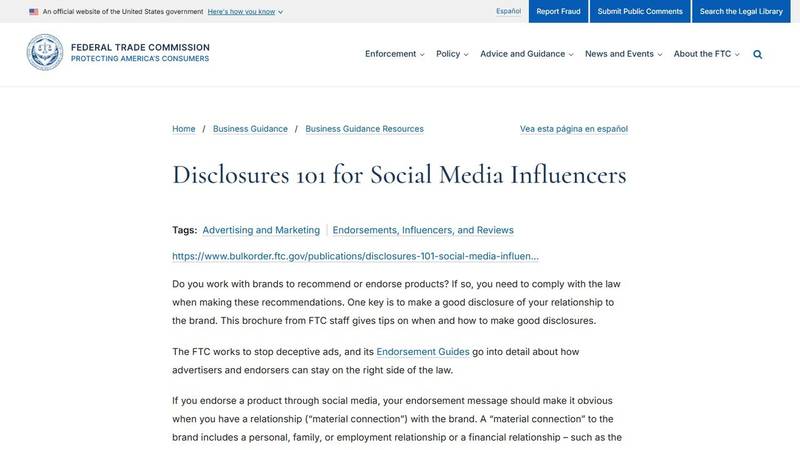
The FTC on when to disclose. The FTC’s staff guide says to disclose any financial, employment, personal or family relationship with a brand, and that financial relationships are not limited to money: free or discounted products count. It says to disclose even if you think your opinion is unbiased, and that tags, likes and pins can be endorsements. It also says you cannot talk about your experience with a product you have not tried.
The FTC on how to disclose. The guide says the disclosure should be placed with the endorsement message, not only on a profile page, at the end of a post, or behind a “more” click. It should not be mixed into a group of hashtags or links. In a video it should be in the video itself, and in a live stream it should be repeated. It recommends simple words such as “advertisement”, “ad” and “sponsored”, and warns against vague terms such as “sp”, “spon” or “collab”, or stand-alone words like “thanks” or “ambassador”.
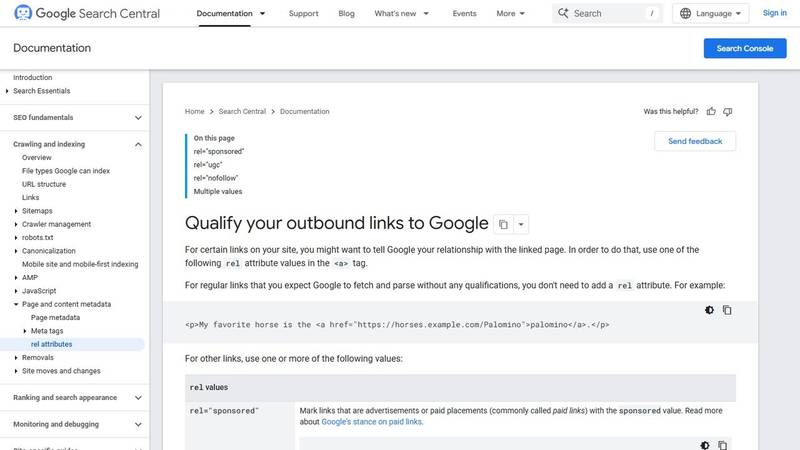
Google on paid links. Google’s documentation says to mark links that are advertisements or paid placements with the sponsored value. It adds that nofollow was previously recommended and is still an acceptable way to flag them, though sponsored is preferred.
Our reading: the FTC rules aim at the reader’s eyes, and Google’s rules aim at search engines. A page can satisfy one and ignore the other.
Two real sponsored pages
We read both pages on 23 November 2026. We use the FTC’s principle (hard to miss, with the message, simple words) as a yardstick for what is visible. This is not a legal assessment of either outlet.
The Block, published 9 November 2026
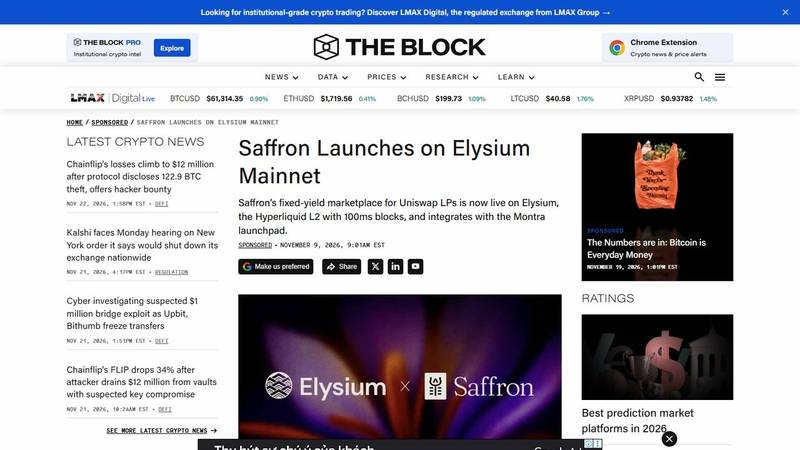
- Address and navigation. The URL contains
/sponsored/, and the breadcrumb at the top of the page reads Home, Sponsored, then the article title. - Label. The word “Sponsored” appears directly under the headline and the one-sentence summary, on the same line as the date and time, so you see it before the body text. The sidebar also labels another paid item “Sponsored”.
- Footer. A statement at the bottom of the page says sponsored content and press releases are labelled as such and are not written by the editorial team.
- Sponsor name. We did not see a named sponsor in the label line. The article is about a product called Saffron, so the reader has to infer who is behind it.
CoinDesk, published 30 October 2026
- Navigation. The site menu has a “Sponsored” section.
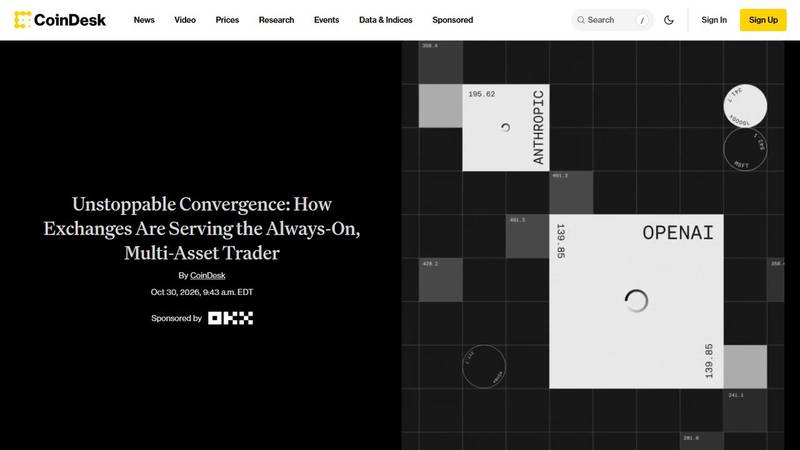
- Byline. The page shows “By CoinDesk” and, below the date and time, a line reading “Sponsored by” followed by a logo of the sponsoring exchange.
- Label position. The sponsor line sits below the headline, with the byline, so you see it without scrolling on a desktop screen.
- Links. In a real browser we read the
relattribute of the outbound links in the article area. We counted seven. Six carriednofollow, one had nonofolloworsponsoredvalue, and none carriedsponsored. Google callsnofollowacceptable for paid links thoughsponsoredis preferred. One of the links pointed to a page on the EU regulator ESMA‘s site.
For The Block, our script found no outbound links in the article area, which may be down to how we selected them, so we draw no conclusion about its link tags.
Our reading: both pages made the paid nature visible near the top. They differ on who is named. CoinDesk’s byline names the payer. The Block’s page labels the content as sponsored and relies on a footer statement to explain who wrote it.
Six checks you can run in two minutes
- Look at the address and menus. A path such as
/sponsored/, a breadcrumb or a “Sponsored” menu item is a strong signal. - Find the label. It should be next to the headline or date, in plain words like “Sponsored” or “Ad”, and visible without scrolling or clicking.
- Read the byline. It should say who paid. A byline that credits the outlet’s newsroom without naming the payer deserves a second look.
- Read the footer or disclosure page. Many outlets explain how they handle paid content.
- Check the links. In your browser’s developer tools, search the page for
rel=and look forsponsoredornofollow. A missing tag is not proof of anything, but a labelled page with unlabelled paid links is inconsistent. - Judge the content. Is it all upside, with no risks, no independent data and numbers that only the company can supply? Is there a call to sign up? That is promotion, whatever the label says.
Spotting a shill on social media
The FTC guide gives the standard, so a post breaks it when:
- there is no disclosure in the post, only on a profile page;
- the disclosure is at the end, behind a “more” click, or buried among hashtags;
- the words are vague, such as “sp”, “spon” or “collab”;
- a video has the disclosure only in the description, not in the video;
- a live stream never repeats it;
- the promoter claims personal experience with a product they have not tried.
These are signs, not proof. A missing disclosure does not show a payment happened, and a disclosure does not make a claim true. When you see several signs, go to the primary source before you act: the project’s own documents, a regulator’s register or independent data.
What we did not check
- We did not survey how many crypto outlets or influencers label correctly. Two pages cannot show a pattern.
- We did not verify any commercial relationship beyond what the pages themselves say.
- We did not read the full text of the FTC Endorsement Guides or any non-US rules, so this guide does not say what the law requires in your country.
- Our reading of link tags covers one page per outlet, at one moment.
- We did not test how search engines treat the two pages.
FAQ
Is sponsored content always bad?
No. It is paid, so treat it as information from the advertiser. Check the facts yourself against primary sources.
What is the difference between sponsored content and an advertorial or native ad?
In practice the terms overlap. All describe paid content designed to look like the surrounding editorial pages, which is why a clear label matters.
Is #ad enough on social media?
The FTC guide says “ad” and “sponsored” are clear terms, and that a hashtag is fine but not necessary. What matters is that the disclosure is hard to miss and in the post itself.
Why do paid links use nofollow or sponsored?
Google asks site owners to mark paid links so it can recognise them as paid. The tag is a signal for search engines, not for the reader.
Does a label mean I can trust the content?
No. The label tells you it is paid. Whether it is accurate is a separate question.
This article is for information only and is not legal, financial or investment advice. It describes pages as we saw them on 23 November 2026.