




















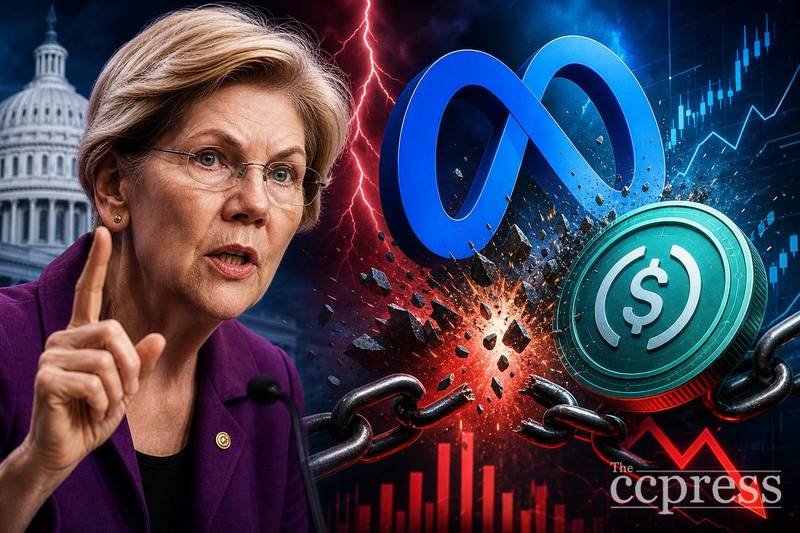
Senator Elizabeth Warren has raised concerns that Meta’s reported plans to integrate a third-party stablecoin into its platforms could undermine competition in digital payments, adding fresh political pressure to the ongoing stablecoin regulation debate in Washington.
Why Warren Is Targeting Meta’s Reported Stablecoin Plan
Warren, alongside Senator Richard Blumenthal, sent a letter to Meta questioning the company’s plans to bring stablecoin-based payments to its ecosystem. The senators raised concerns about financial stability, illicit finance, and consumer protection tied to the integration.
The reported plan involves Meta partnering with an external stablecoin issuer rather than launching its own token. This distinction matters because Meta previously attempted to create its own digital currency, originally called Libra, which faced intense regulatory backlash and was eventually abandoned.
Warren’s criticism centers on competition. A company with Meta’s user base, spanning Facebook, Instagram, and WhatsApp, could rapidly dominate digital payments simply by embedding a stablecoin option across its apps. The concern is not just about the coin itself but about who controls the rails.
What a Third-Party Stablecoin Partnership Could Mean for Meta
By partnering with an existing stablecoin issuer instead of creating its own token, Meta would sidestep some of the regulatory hurdles that sank Libra. A third-party arrangement lets Meta position itself as a distribution channel rather than a financial services company.
That framing does not eliminate the policy concerns. Warren’s letter suggests that Meta’s sheer scale could give any partner stablecoin an outsized advantage over competitors, effectively picking a winner in the stablecoin market through platform access alone. The timing of the Democrats’ pushback coincided with a key Senate vote on stablecoin legislation, underscoring the political stakes.
The distinction between issuing a stablecoin and distributing one may matter less than it appears. If billions of users gain default access to a single stablecoin through Meta’s apps, the competitive landscape shifts regardless of who technically mints the tokens.
This dynamic echoes broader concerns about Big Tech’s role in financial services. The recent regulatory approval Circle received under Europe’s MiCA framework for USDC and EURC services shows that stablecoin issuers are already navigating complex compliance environments, and a Meta partnership would add another layer of scrutiny.
Why This Debate Matters for Crypto Policy and Big Tech
Warren’s intervention signals that stablecoin regulation will not be decided on technical merits alone. The competition argument introduces antitrust thinking into a policy area that has so far been framed primarily around consumer protection and financial stability.
For the crypto industry, the outcome of this debate could shape how stablecoins are regulated at the federal level. If lawmakers adopt competition-focused restrictions, it could limit how large technology companies participate in digital payments, potentially preserving space for smaller issuers and decentralized alternatives.
The stablecoin sector has already drawn attention from law enforcement and regulators across multiple fronts. Authorities have increased their focus on how digital assets move through financial systems, as seen in cases like recent cryptocurrency seizures tied to illicit marketplaces and the rising volume of crypto exploits reported this year.
Whether Meta’s reported stablecoin partnership moves forward may depend on how Congress resolves the broader stablecoin bill currently under debate. Warren’s letter makes clear that at least some lawmakers will push to ensure Big Tech does not gain an unregulated foothold in digital payments before that legislation is settled.
Disclaimer: This article is for informational purposes only and does not constitute financial or investment advice. Cryptocurrency and digital asset markets carry significant risk. Always do your own research before making decisions.