



















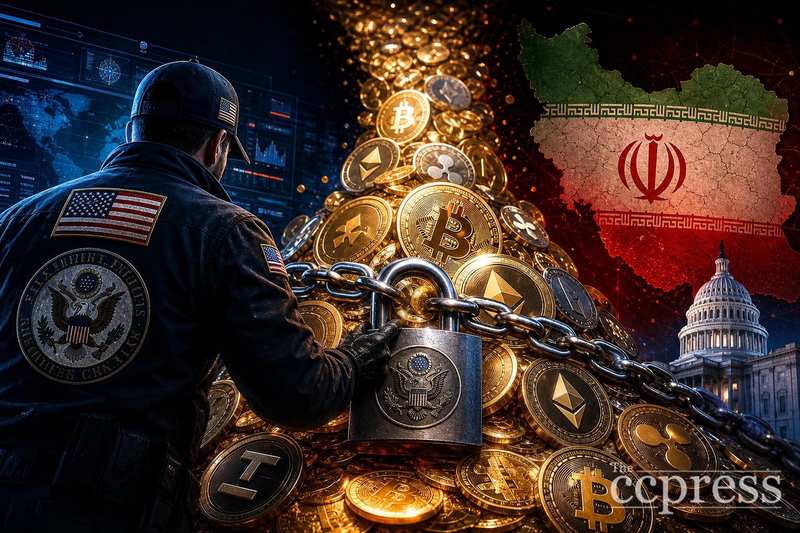
U.S. Treasury Secretary Scott Bessent said the United States has seized nearly $1 billion in cryptocurrency linked to Iran, marking one of the largest crypto enforcement actions tied to sanctions evasion.
What Bessent Said About the Iran-Linked Crypto Seizure
Bessent described the action as part of a broader campaign of “economic fury” against the Iranian regime. According to a Fox Business report, the Treasury Secretary framed the crypto seizures as a financial pressure tool designed to push the regime into crisis.
A significant portion of the seized funds involved USDT (Tether) frozen in coordination with the Office of Foreign Assets Control (OFAC) and U.S. law enforcement. Tether confirmed it supported the freeze of more than $344 million in USDT as part of that effort.
The U.S. government also sanctioned wallets tied to Iran, freezing an additional $344 million in cryptocurrency through wallet-level sanctions. Together, these actions form the basis of Bessent’s claim that the total approaches the nearly $1 billion figure.
What the Seizure Tells Us About Crypto Enforcement
The scale of this action signals that U.S. authorities are treating stablecoin infrastructure as a frontline enforcement tool. The Tether freeze demonstrates how centralized stablecoin issuers can serve as compliance chokepoints when governments demand asset freezes.
For the crypto sector, the action underscores the growing role of private-sector cooperation in sanctions enforcement. Tether’s coordination with OFAC to freeze wallets at this scale is among the largest known instances of a stablecoin issuer acting on government direction, a development that could shape how U.S. economic policy intersects with digital assets going forward.
The reported seizure also arrives amid broader government attention to digital finance and technology. Initiatives such as the international AI and technology summit in Indonesia reflect how governments worldwide are grappling with emerging technologies, while events like GovXcellence Jakarta highlight the growing focus on digital governance frameworks.
Why the Reported Size Stands Out
A crypto seizure approaching $1 billion tied to a single nation-state actor is rare. The figure, if fully verified through official Treasury disclosures, would represent a significant escalation in the use of blockchain-based enforcement against sanctioned entities.
The combination of stablecoin freezes and wallet-level sanctions suggests a multi-layered approach. Rather than relying on a single mechanism, U.S. authorities appear to be coordinating across private issuers and federal sanctions tools to cut off crypto-based channels used by Iran.
Further details about the specific wallets, transaction chains, and legal proceedings involved have not yet been released through official Treasury channels.
Disclaimer: This article is for informational purposes only and does not constitute financial or investment advice. Cryptocurrency and digital asset markets carry significant risk. Always do your own research before making decisions.