Most beginner guides to crypto exchanges optimize for the wrong thing. They rank by ease of signup and clean interface, which is how platforms designed to extract the most fees from the least-informed users end up at the top of lists. The actual question a first-time buyer should be asking is: which platforms are regulated enough that I have recourse if something goes wrong, transparent enough that I know what I am paying, and stable enough that they will still exist in three years?
Quick comparison
| Rank | Exchange | Best for | Maker / taker fee | Key beginner fact |
|---|---|---|---|---|
| 1 | Coinbase | US beginners, regulated simplicity | 0.40% / 0.60% (Advanced Trade) | Standard Buy button charges up to 1.49% spread |
| 2 | Kraken | Security-focused beginners, EU/UK | 0.25% / 0.40% (Pro) | Applying for European banking license July 2026 |
| 3 | Gemini | Compliance-first users, NY residents | 0.20% / 0.40% (ActiveTrader) | SOC 2 Type II audited; fixed fee for small purchases |
| 4 | Bitstamp | Low-fee beginners who trade regularly | 0.30% / 0.40% | Acquired by Robinhood 2024; European licensing intact |
| 5 | Crypto.com | Mobile-first beginners, card spending | 0.075% / 0.075% (VIP) | Fee tiers opaque for basic users; card is main draw |
| 6 | Binance | Experienced beginners only; not US | 0.10% / 0.10% | DOJ monitorship; not in all US states |
The 6 best crypto exchanges for beginners in 2026
1. Coinbase
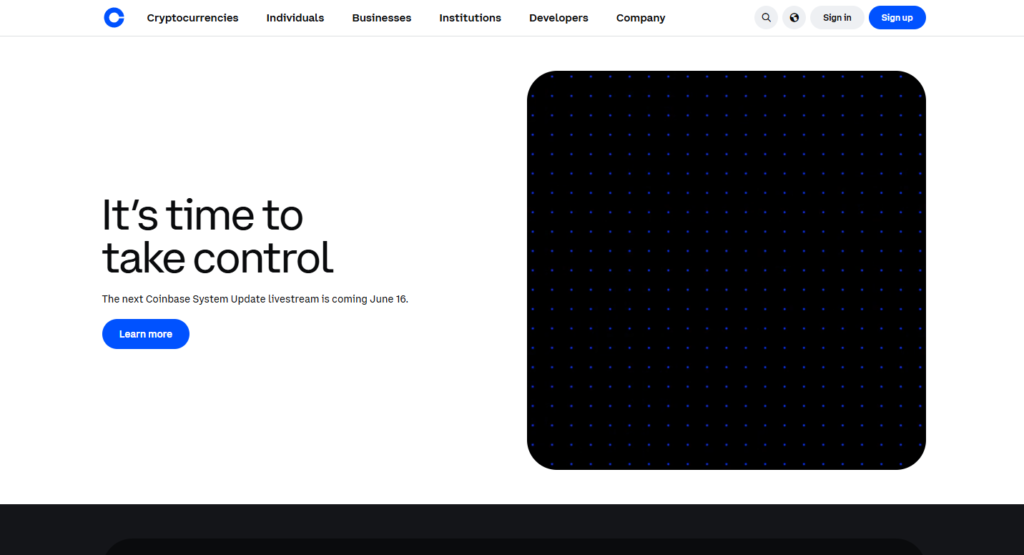
Coinbase is the most straightforward regulatory case for a US-based beginner. It holds licenses across multiple US states, serves as custodian for several spot Bitcoin ETFs approved by the SEC, obtained a MiFID license in the United Kingdom, and aligned its stablecoin strategy with the GENIUS Act framework after that law passed in July 2025.
The fee situation is the thing every beginner guide omits. Coinbase’s standard interface charges a spread-based fee of up to 1.49% on simple purchases, plus a fixed fee for small transactions. A $100 Bitcoin purchase on the standard interface can cost $2.99 in fees – not advertised prominently at the purchase screen.
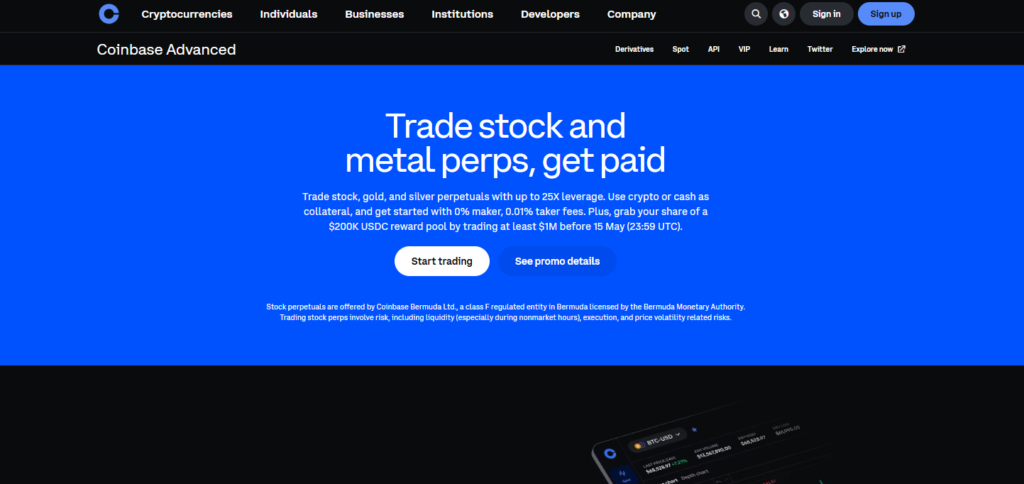
Coinbase Advanced Trade charges a maker fee of 0.40% and taker fee of 0.60% for lower-volume users. A beginner who does not find it will pay three to four times more for every trade on the standard interface.
Coinbase One ($29.99/month or $299/year) waives transaction fees on up to $10,000 monthly trades and includes priority support. For occasional buyers, the standard fee structure applies.
Security is solid: two-factor authentication, withdrawal address whitelisting, biometric login, and FDIC insurance on USD balances. The SEC lawsuit against Coinbase was resolved by 2025.
Best for: US-based beginners who want clear regulatory structure and are willing to find Advanced Trade to reduce fees.
Main tradeoff: New users who do not find Advanced Trade will overpay for every trade.
2. Kraken
Kraken has operated since 2011 and has never experienced a significant platform-level security breach. In a category defined by high-profile failures – FTX, Celsius, Voyager – that track record is a meaningful differentiator.
Kraken applied for a European banking license in July 2026, reported by CoinDesk. If approved, Kraken would be among the first crypto exchanges to hold a full banking license in Europe.
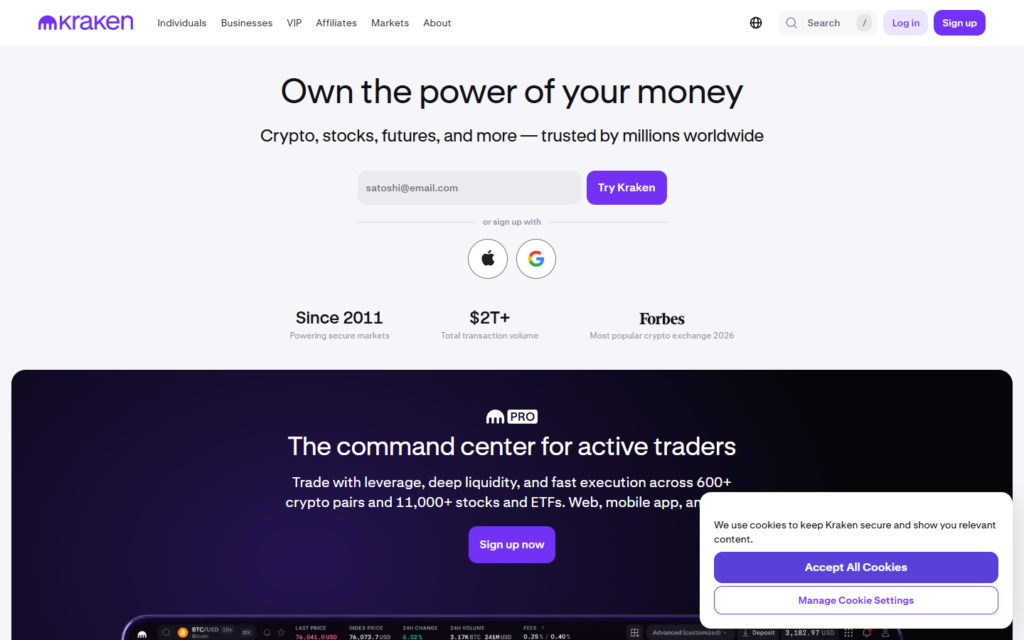
Kraken’s fee structure is transparent: standard taker is 0.26%. Kraken Pro starts at 0.25% maker / 0.40% taker – not hidden behind a separate product page. Customer support (24/7 live chat) is a genuine differentiator.
Best for: Beginners outside the US, or US users who prioritize security track record and want consistent, transparent fees.
Main tradeoff: Interface is functional but less polished than Coinbase consumer design.
3. Gemini
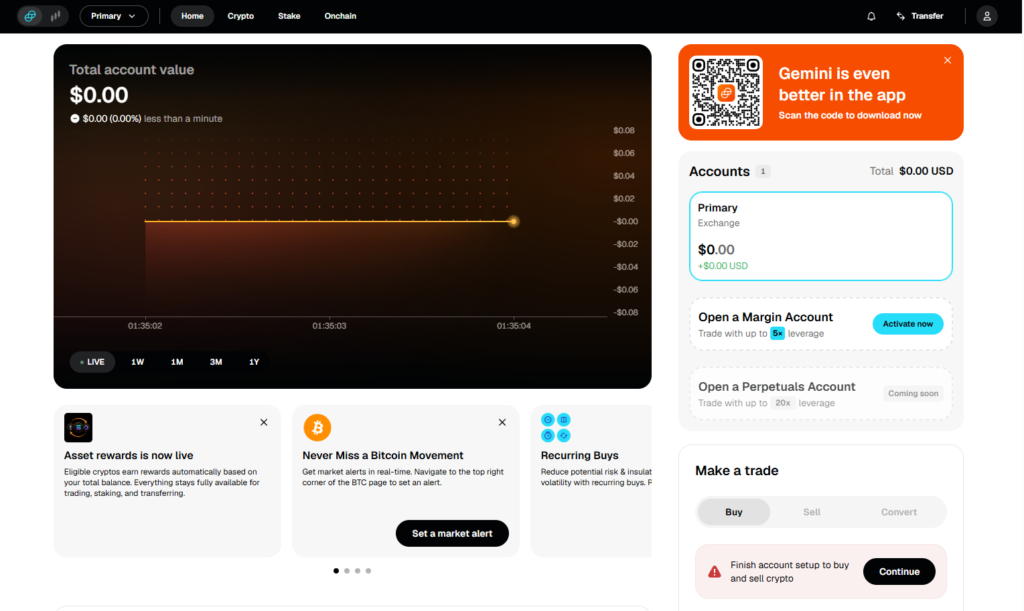
Gemini holds a New York BitLicense, a trust company charter from NYDFS, and SOC 2 Type II certification. For US users in strict-licensing jurisdictions, Gemini is often the clearest regulated option.
The Gemini Earn collapse in 2022-2023 left approximately $900 million in user funds frozen when Genesis filed for bankruptcy. The settlement and repayment completed in 2024. The episode illustrates that a compliant exchange does not guarantee compliant third-party partnerships.
Gemini ActiveTrader offers 0.20% maker / 0.40% taker fees. The basic interface charges 1.49% above $200 in purchase value. Token selection is approximately 70 assets – deliberately limited, which reduces speculative-token risk for beginners.
Best for: US beginners in strict-licensing states (especially New York) who want a curated asset list and strong compliance track record.
Main tradeoff: Limited token selection. ActiveTrader requires deliberate navigation to access lower fees.
4. Bitstamp
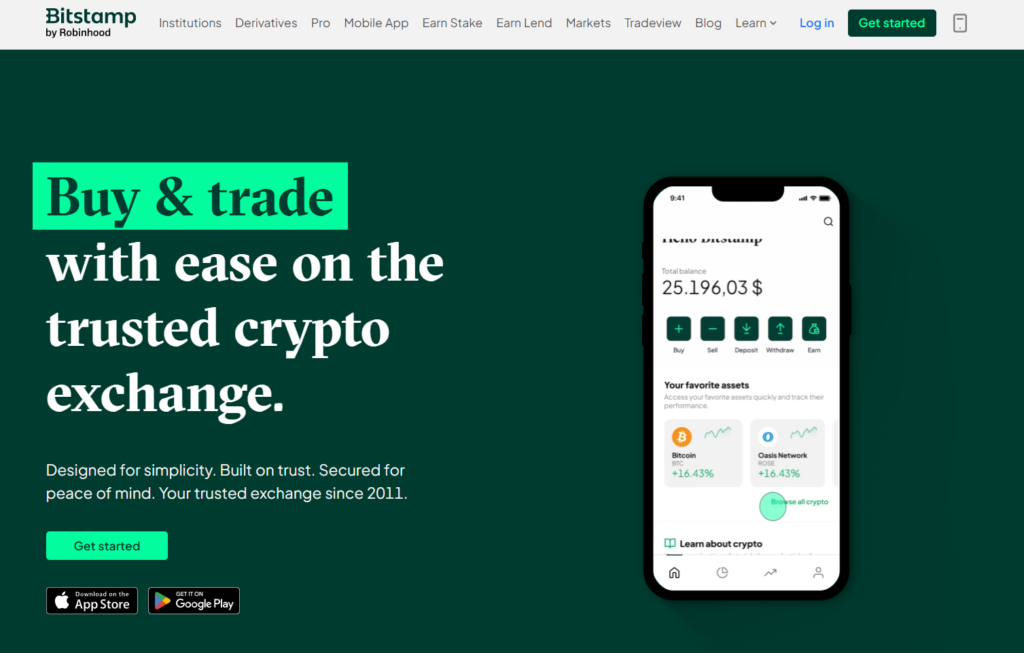
Bitstamp has operated since 2011 and was acquired by Robinhood in 2024, preserving its European regulatory licensing – including a Luxembourg-based payment institution license under MiCA-aligned rules.
Bitstamp charges a 0.40% taker fee for users trading under $10,000 per month, displayed explicitly.
Best for: European-based beginners who want a regulated exchange with transparent fees.
Main tradeoff: Interface dated. Token selection narrower than larger platforms. US availability limited post-Robinhood integration.
5. Crypto.com
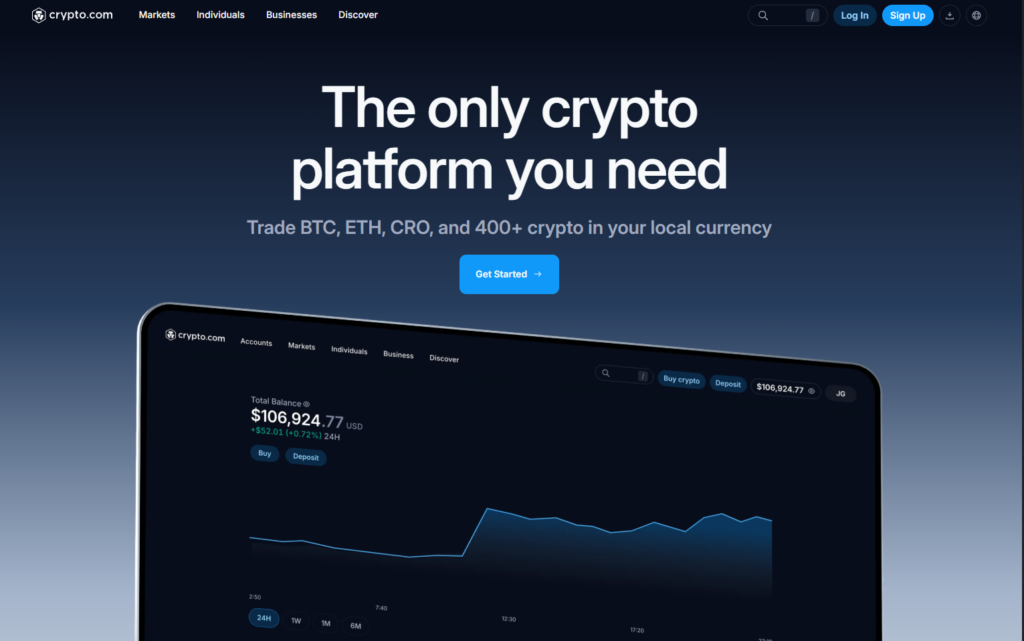
Crypto.com’s draw for beginners is its mobile interface and Visa card program, with higher card tiers requiring staking of the platform’s CRO token. The app charges an embedded spread of approximately 0.4%-0.9% without displaying a percentage fee explicitly. The professional exchange (Crypto.com Exchange) offers 0.075% maker fees but requires CRO staking and a separate product.
The exchange holds a MiCA-compliant license in the EU and FCA registration in the UK.
Staking CRO to access better card tiers is making a position in a platform token – a risk not clearly disclosed in card marketing.
Best for: Mobile-first beginners who want a card program and primarily hold Bitcoin or Ethereum.
Main tradeoff: Fee structure opaque for basic app users. CRO staking creates implicit platform token exposure.
6. Binance
Binance appears last because its regulatory situation makes it a poor first choice for most US-based new users. Binance.US operates as a separate entity after the $4.3 billion DOJ settlement in 2023 and is not available in all US states. The active DOJ monitorship through at least 2026 constrains product availability.
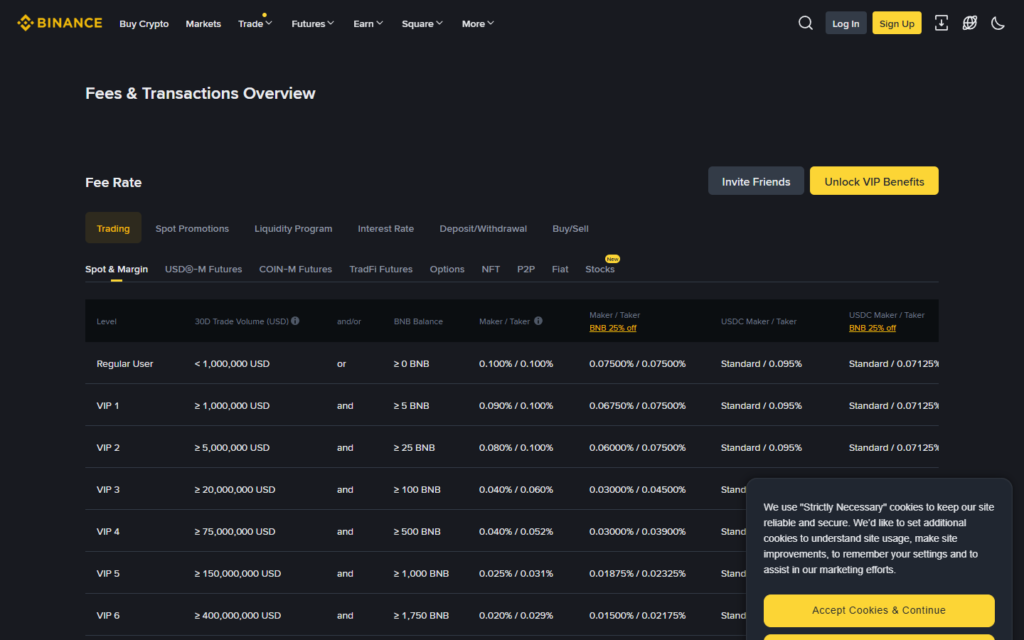
For non-US beginners where Binance.com operates freely, the calculus differs: 0.10% maker/taker fees (0.075% with BNB discount), broadest token selection on this list, and a Lite mode for new users.
Binance publishes its full fee schedule and DOJ settlement context publicly.
Best for: Non-US beginners in regions where Binance.com operates fully.
Main tradeoff: US availability restricted. DOJ monitorship creates product-availability uncertainty.
The fee trap: what exchanges charge beginners vs. power users
Every major exchange on this list operates a two-tier fee structure: a higher-fee simple interface marketed to casual users, and a lower-fee advanced interface accessible to users who know where to look.
| Exchange | Simple interface fee | Advanced interface fee | Fee gap |
|---|---|---|---|
| Coinbase | Up to 1.49% spread + fixed fee | 0.40% maker / 0.60% taker | Up to 4x |
| Gemini | 1.49% spread + flat fee | 0.20% maker / 0.40% taker | ~4x |
| Kraken | 0.26% taker | 0.25% maker / 0.40% taker | Minimal |
| Bitstamp | 0.40% taker (transparent) | Same schedule, volume-tiered | Minimal |
| Crypto.com | 0.4-0.9% (embedded) | 0.075% maker with CRO stake | Up to 12x |
| Binance | 0.10% taker | 0.075% with BNB discount | Minimal |
The exchanges with the largest fee gaps – Coinbase and Gemini – are also the most commonly recommended to beginners. That alignment is not a coincidence. The simple interface is where new-user traffic concentrates, and the fee structure there reflects what that traffic is worth to the platform.
Beginners who learn about the advanced interface in their first week will pay significantly less over time. Beginners who never find it pay three to four times more indefinitely.
How we ranked these exchanges
Beginners are not the same as casual users. A beginner is someone who does not yet know what they do not know – which means the evaluation criteria differs from experienced traders.
We ranked on:
- Account protection – two-factor authentication, withdrawal address whitelisting, and anti-phishing tools
- Fee transparency – whether fees are shown at the point of purchase or buried in the spread
- Regulatory durability – licensing status, compliance posture, and clear legal structure in the user’s jurisdiction
- Fiat access – how easily a new user can move money from a bank account to the exchange and back
- Customer support – whether live support exists and how responsive it is when something goes wrong
- Token selection – whether a beginner-appropriate selection of established assets is available without overwhelming speculative listings
We did not rank on token breadth, trading volume, or interface features most beginners will never use. Those matter for experienced traders; for first-time buyers they are irrelevant or actively harmful.
We reviewed public fee schedules, regulatory licensing pages, and published security reports for each exchange. We did not create live accounts or execute test deposits.
What this review verified and what it did not
| Claim | Status |
|---|---|
| Coinbase standard interface charges up to 1.49% | Confirmed against Coinbase published fee schedule, July 2026 |
| Coinbase Advanced Trade: 0.40% maker / 0.60% taker | Confirmed against Coinbase published fee schedule |
| Kraken European banking license application, July 2026 | Reported by CoinDesk; approval status not independently confirmed |
| Gemini SOC 2 Type II certification | Publicly disclosed by Gemini; most recent audit date not independently verified |
| Bitstamp acquired by Robinhood 2024 | Publicly confirmed; integration scope reviewed against public announcements |
| Binance DOJ monitorship active through 2026 | Confirmed against DOJ settlement documentation |
| Crypto.com MiCA-compliant EU license | Based on Crypto.com public disclosures; specific license number not independently verified |
Frequently asked questions
What is the safest crypto exchange for beginners?
Safety has two dimensions: regulatory safety (risk of exchange collapse or frozen withdrawals) and security safety (risk of being hacked). For regulatory safety, Coinbase, Kraken, and Gemini are the strongest US and European options. For security track record, Kraken’s absence from any major platform breach since 2011 is the clearest benchmark on this list.
How much does a beginner pay to buy Bitcoin on Coinbase?
Using Coinbase’s standard Buy button, a beginner pays up to 1.49% spread plus a fixed fee for small purchases ($0.99 under $10; $1.49 for $10-$25; $1.99 for $25-$50; $2.99 for $50-$200). Using Coinbase Advanced Trade instead, the taker fee is 0.60% – roughly three times less on a $200 purchase.
Which crypto exchange has the lowest fees for beginners?
Among exchanges with strong regulatory standing, Bitstamp has the most transparent low-fee structure: 0.40% taker, displayed explicitly, no separate interface required. Binance is lower at 0.10% but carries regulatory complexity for US users. Crypto.com’s professional exchange is lowest at 0.075% maker but requires CRO staking and a separate interface most beginners will not access.
Can beginners use Binance in the United States?
Binance.US operates in most but not all US states. The global Binance.com platform is not available to US residents. Binance.US offers fewer trading pairs and products than the global platform, and its post-DOJ-settlement regulatory situation continues to evolve.
What happened to Gemini Earn?
Gemini Earn deposited user funds with Genesis Capital, which filed for bankruptcy in January 2023. Approximately $900 million in user funds were frozen. Gemini and Genesis reached a settlement in 2024 resulting in repayments to affected users. Gemini discontinued the Earn product. The current Gemini exchange and ActiveTrader products are separate from the discontinued Earn program.
Should a beginner use a crypto exchange or an exchange aggregator?
A crypto exchange is the right starting point for beginners. Exchanges handle account creation, KYC verification, fiat on-ramps, and customer support in a single product. Crypto exchange aggregators route trades across multiple liquidity sources for better prices but typically do not handle fiat purchases, do not offer customer accounts, and require familiarity with wallets and on-chain transactions that most beginners have not yet developed.
Will regulated exchanges survive competing with offshore platforms?
The unresolved question through 2026 is whether regulated platforms can retain users when offshore competitors offer more tokens, lower fees, and fewer compliance steps. The GENIUS Act stablecoin framework and MiCA in Europe have pushed more users toward regulated platforms for stablecoin products. But for spot trading of non-stablecoin assets, offshore platforms continue to offer terms that regulated exchanges cannot match under compliance constraints. Whether regulation ultimately expands the regulated market or drives volume offshore is still playing out.