
TheCCPress already covers that news-and-power-map intent in 12 Crypto Regulators to Watch in 2026. This article provides the operational regulator check for an editor, exchange, issuer, trader, or institutional buyer assessing a specific product claim.
Key Takeaways:
- Regulator selection is a product-and-jurisdiction exercise; a company name alone is not enough.
- The SEC and CFTC divide much of the US classification and derivatives analysis, while MiCA uses EU coordination plus national competent authorities for CASP activity.
- Stablecoin, custody, and banking claims require separate evidence. A crypto licence does not automatically prove reserve compliance, asset segregation, or fiat access.
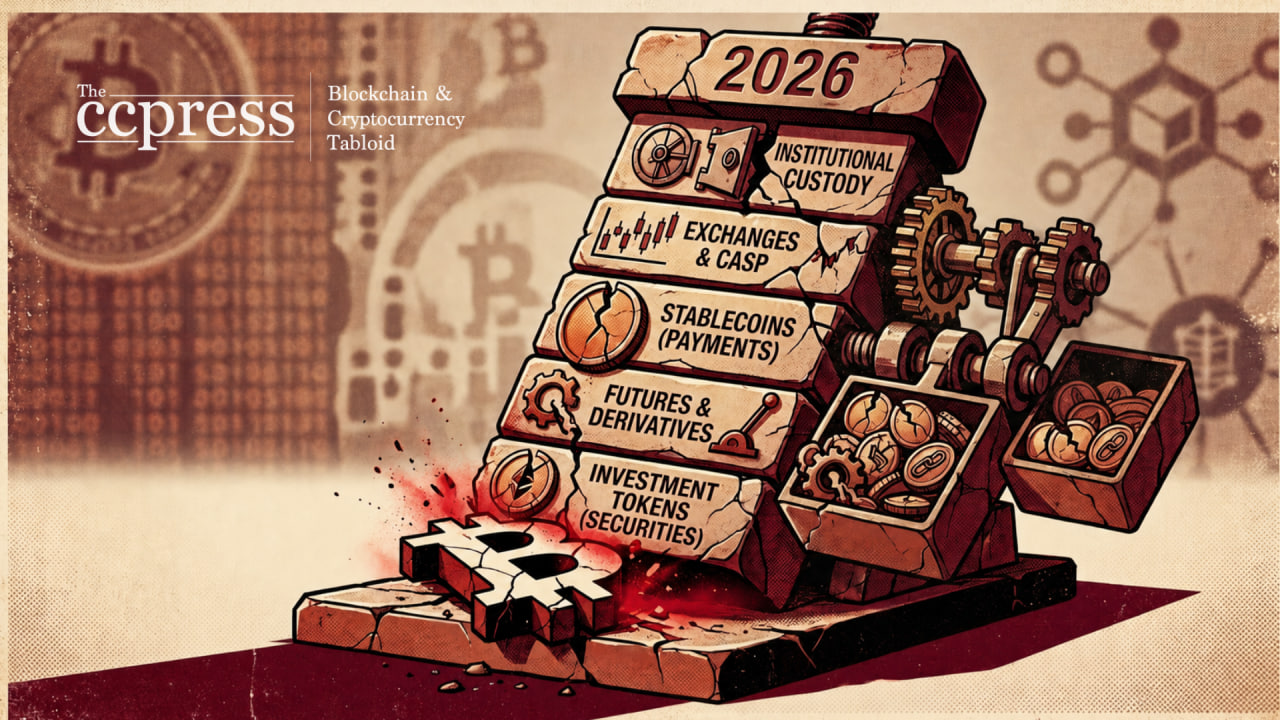
The product-by-product regulator map
| Product or activity | First regulatory lane to check | Authority or authority group | Evidence that answers the question |
|---|---|---|---|
| Token offered as an investment | Securities classification and disclosure | SEC or relevant national securities authority | Filing, order, statement, offering structure, and named issuer |
| Futures, options, or perpetuals | Commodity derivatives and venue oversight | CFTC in the US; national derivatives authority elsewhere | Venue registration, product approval, margin rules, and jurisdiction terms |
| Stablecoin issuance or distribution | Reserve, redemption, issuer, and payment-token rules | EBA and national authorities under MiCA; MAS, FCA, or other local authority | Token category, issuer permission, reserve disclosure, redemption terms, and date |
| Exchange or CASP services | Trading, custody, transfer, and passporting permission | ESMA coordination plus the home-state competent authority | Legal entity, register entry, service categories, passport, and effective status |
| Institutional custody | Asset segregation, signing, recovery, and client-asset controls | The authority supervising the custodian and service | Custody agreement, entity, segregation model, recovery controls, and audit evidence |
| Fiat account or payment rail | Banking, payments, AML, and source-of-funds controls | Bank or payment supervisor in the relevant jurisdiction | Account entity, permitted activity, payment terms, monitoring, and onboarding scope |
Token classification: start with the asset and the transaction
The SEC is the first US reference point when the claim concerns an investment contract, securities offering, disclosure, trading venue, or intermediary activity. The correct test records the rights sold, the promoter, the profit expectation, and the transaction being offered. A token can move between different practical risk lanes depending on the initial sale, secondary market, issuer promises, and platform conduct.
The CFTC becomes relevant when the product is treated as a commodity or is offered through a derivatives venue. That does not make the SEC irrelevant: a platform can have a spot product, a token offering, and a perpetual contract with different legal analyses. Record the asset, contract, venue, customer type, and jurisdiction before assigning an authority.
Derivatives: distinguish the contract from the underlying asset
Futures, options, swaps, and perpetuals create a different regulatory question from simply buying and holding the underlying token. In the US, the CFTC is normally the first authority to check for a regulated derivatives venue and product. The relevant evidence includes designated contract market status, product approval, margin methodology, clearing, customer eligibility, and the venue’s geographic restrictions.
The underlying asset can still trigger a separate securities or commodities analysis. A regulated contract does not certify the issuer, spot market, custody provider, or token economics. Compare the derivative’s reference price, liquidation rules, funding mechanism, collateral, and legal entity rather than copying the status of the spot exchange.
Stablecoins: follow the issuer, reserve, and redemption chain
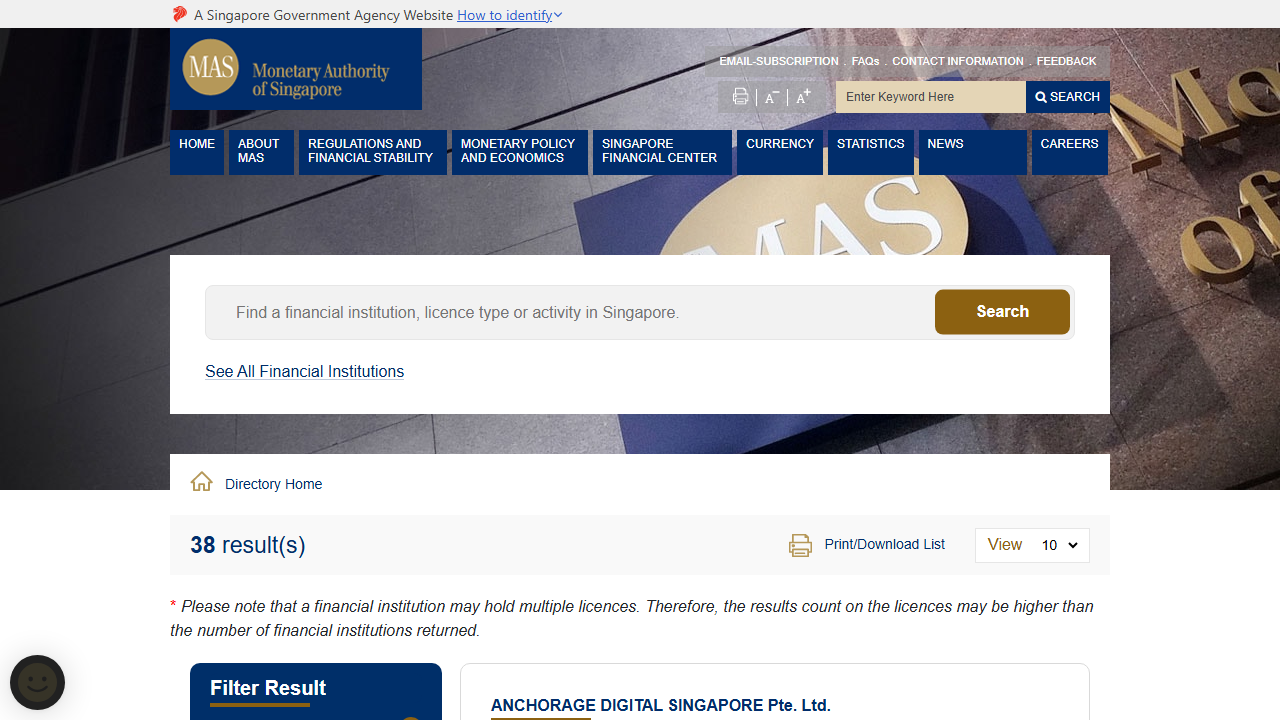
Stablecoin analysis starts with the token category and issuer model. Under MiCA, the EBA is particularly relevant for significant asset-referenced tokens and e-money tokens, while national authorities remain important for authorisation and supervision. In Singapore, MAS is central to payment-token licensing and conduct; in the UK, the FCA and related authorities matter as the regime develops.
The evidence must cover who issues the token, what backs it, who can redeem it, where reserves are held, how disclosures are updated, and what happens during a suspension or stress event. A token being listed on a regulated exchange does not prove that its reserves, issuer, or redemption rights satisfy the reader’s jurisdictional requirements.
Exchanges and CASPs: verify the entity, service, and passport
For an EU exchange, ESMA is the coordination and register starting point, but the national competent authority and the named CASP entity determine the practical authorisation record. Check whether the permission covers custody, exchange, execution, transfer, advice, or another service. A group website, brand name, or “EU regulated” label is not a substitute for the entry attached to the contracting entity.
The same workflow applies outside the EU. The FCA matters for the UK’s registration, financial-promotion, and developing authorisation perimeter; MAS matters for Singapore digital-payment-token services; the SFC matters for Hong Kong VATP licensing; and Japan’s FSA matters for registered exchange and disclosure requirements. Always identify the customers, product, and entity being assessed before applying a regulator label.
Custody: crypto authorisation is not proof of asset protection
Custody requires a separate control review. Identify who generates and controls keys, who approves movement, whether assets are segregated, how hot-wallet limits work, how recovery is tested, and what the client receives if the provider becomes insolvent. A provider can offer custody technology while another regulated entity holds the legal responsibility for the assets.
The right supervisor is therefore the authority overseeing the custodian’s actual service, not necessarily the regulator most visible in the provider’s marketing. Compare the custody agreement, client-asset rules, subcontractors, insurance exclusions, withdrawal controls, audit rights, and incident-notification terms before calling a provider “regulated custody.”
Banking and fiat access: look beyond the crypto regulator
Banking access is often controlled by ordinary banking and payments supervision rather than a dedicated crypto regulator. A crypto company may have a CASP or AML registration and still fail a bank’s source-of-funds, sanctions, customer-geography, transaction-corridor, or operational-resilience review.
For this lane, identify the bank or payment institution, the account entity, permitted crypto flows, settlement partners, currencies, limits, monitoring process, and closure terms. A bank account proves that a relationship exists; it does not prove that every token, customer type, or business model is authorised.
A five-step regulator check for any crypto claim
- Define the activity: issuance, listing, trading, derivatives, custody, transfer, payment, or banking.
- Fix the jurisdiction: issuer location, customer location, venue location, and contracting entity may differ.
- Find the primary authority: use the regulator register, final rule, order, filing, or official policy statement.
- Match scope: verify service category, asset type, customer eligibility, geography, and effective date.
- Preserve the status label: distinguish final authorisation, registration, application, consultation, guidance, and enforcement.
| Claim being reviewed | Minimum verification record | Common false shortcut |
|---|---|---|
| “Regulated exchange” | Legal entity, authority, service, country, status date | Counting licences across the group |
| “Compliant stablecoin” | Issuer, token category, reserves, redemption, authority, date | Treating a listing as reserve approval |
| “Institutional custody” | Asset holder, signer, segregation, recovery, contract | Treating MPC technology as legal custody |
| “Banking available” | Bank entity, allowed flows, limits, customer geography | Treating incorporation as bank approval |
How to apply the map to a real editorial claim
Suppose an exchange announces that it is “licensed across Europe.” The map says to begin with the CASP lane, not with the company’s homepage or a list of jurisdictions where it has customers. Find the legal entity in the national register, confirm the MiCA service categories, check the passport or host-country information, and then compare the result with the exact service being discussed. If the article is about derivatives, repeat the check for derivatives; if it is about custody, repeat it for custody.
The same discipline prevents false comparisons between issuers. A stablecoin issuer, a wallet provider, and an exchange can all use the word “regulated” while referring to different permissions. One may have an issuer authorisation, another may have a CASP permission, and the third may have a payments or AML registration. The reader needs the authority, legal entity, activity, status, and date in one evidence chain.
For refreshes, preserve the previous status instead of silently rewriting it. Mark a record as applicant, conditional approval, final authorisation, passported service, suspended, or no longer current. This makes the article useful when a consultation becomes a rule, a transition period ends, a product is restricted, or a bank changes its risk appetite. It also keeps the product map separate from the live news watchlist, which should change when the political or enforcement signal changes.
Frequently asked questions
Is there one global crypto regulator?
No. Authority follows the product, activity, entity, and jurisdiction. A global exchange can interact with securities, derivatives, payments, banking, data, and consumer-protection authorities at the same time.
Does a MiCA licence cover every exchange feature?
No. The authorisation is connected to a named entity and defined crypto-asset services. Check custody, exchange, transfer, advice, staking, lending, derivatives, and stablecoin availability separately.
Does a regulated token have lower market risk?
No. Regulatory status can clarify legal access and disclosure obligations, but it does not eliminate volatility, reserve, issuer, liquidity, technology, or counterparty risk.
Disclaimer: This article is for informational purposes only and does not constitute financial or investment advice. Cryptocurrency and digital asset markets carry significant risk. Always do your own research before making decisions.