



















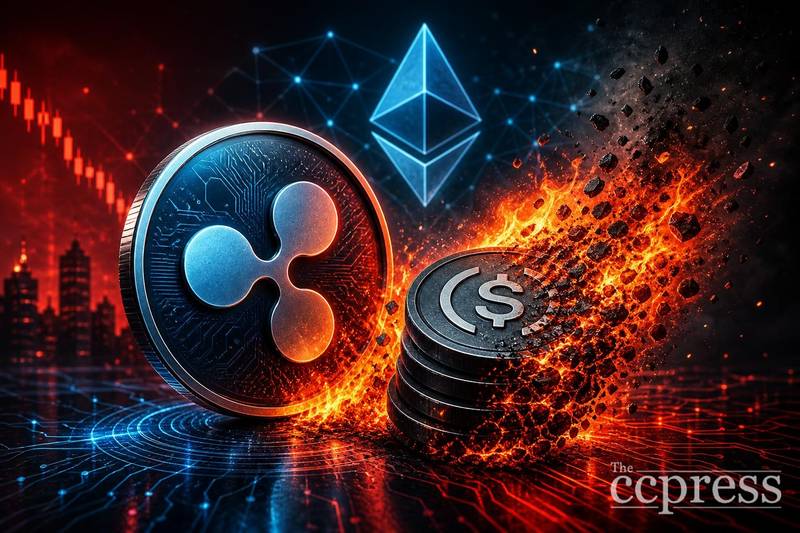
A report says Ripple burned over 32 million RLUSD on Ethereum, drawing attention to the company’s stablecoin supply management and on-chain activity on the network.
What the report claims about Ripple’s 32 million RLUSD burn
According to a report from U.Today, Ripple conducted a burn of more than 32 million RLUSD tokens on the Ethereum blockchain. The burn was flagged by on-chain tracking account RL_Tracker on X.
A token burn refers to the permanent removal of tokens from circulation by sending them to an inaccessible wallet address. The process effectively reduces the total supply of the asset available on the network.
The Ethereum address associated with the RLUSD activity can be viewed on Etherscan, where token movements tied to the reported burn are recorded on-chain.
Why an RLUSD burn on Ethereum matters
RLUSD is Ripple’s stablecoin, and its supply dynamics are closely watched by market participants tracking stablecoin competition. A burn of this size, if confirmed, represents a notable reduction in circulating supply on one of the token’s supported chains.
The fact that the burn occurred on Ethereum rather than the XRP Ledger is significant. Ethereum remains the dominant chain for stablecoin issuance and DeFi activity, and RLUSD supply changes there are visible to a broad ecosystem of analytics tools and traders.
This event follows a pattern of RLUSD burns on Ethereum. A separate U.Today report noted 40 million RLUSD was burned in an earlier instance, raising questions about whether these burns reflect routine supply management or shifting demand. The pattern is similar to how other stablecoin issuers adjust circulation based on redemption activity, a dynamic recently seen when USDC circulation fell by $1.7 billion in seven days.
What to watch next after the reported RLUSD burn
Market observers will likely watch for official confirmation or commentary from Ripple regarding the burn’s purpose. Token burns by stablecoin issuers can indicate redemptions, supply rebalancing across chains, or adjustments to treasury management.
Further on-chain activity on the flagged Ethereum address may clarify whether additional burns are planned or whether minting activity offsets the reduction. Stablecoin supply movements have drawn increasing attention as the sector grows more competitive, as seen in recent stablecoin circulation reports and developments like new crypto ETF filings with the SEC.
The reported burn may also attract broader scrutiny of RLUSD’s adoption at a time when institutional interest in digital assets continues to expand, with firms like Bitdeer reporting weekly mining and sales activity that underscores broader market engagement.
Disclaimer: This article is for informational purposes only and does not constitute financial or investment advice. Cryptocurrency and digital asset markets carry significant risk. Always do your own research before making decisions.